Ghrelin receptor binding
Characterised as an agonist at the growth hormone secretagogue receptor, studied in receptor-expressing cell preparations.
- Assessed at GHS-R1a
- Studied in receptor-expressing lines
- Compared against other secretagogues
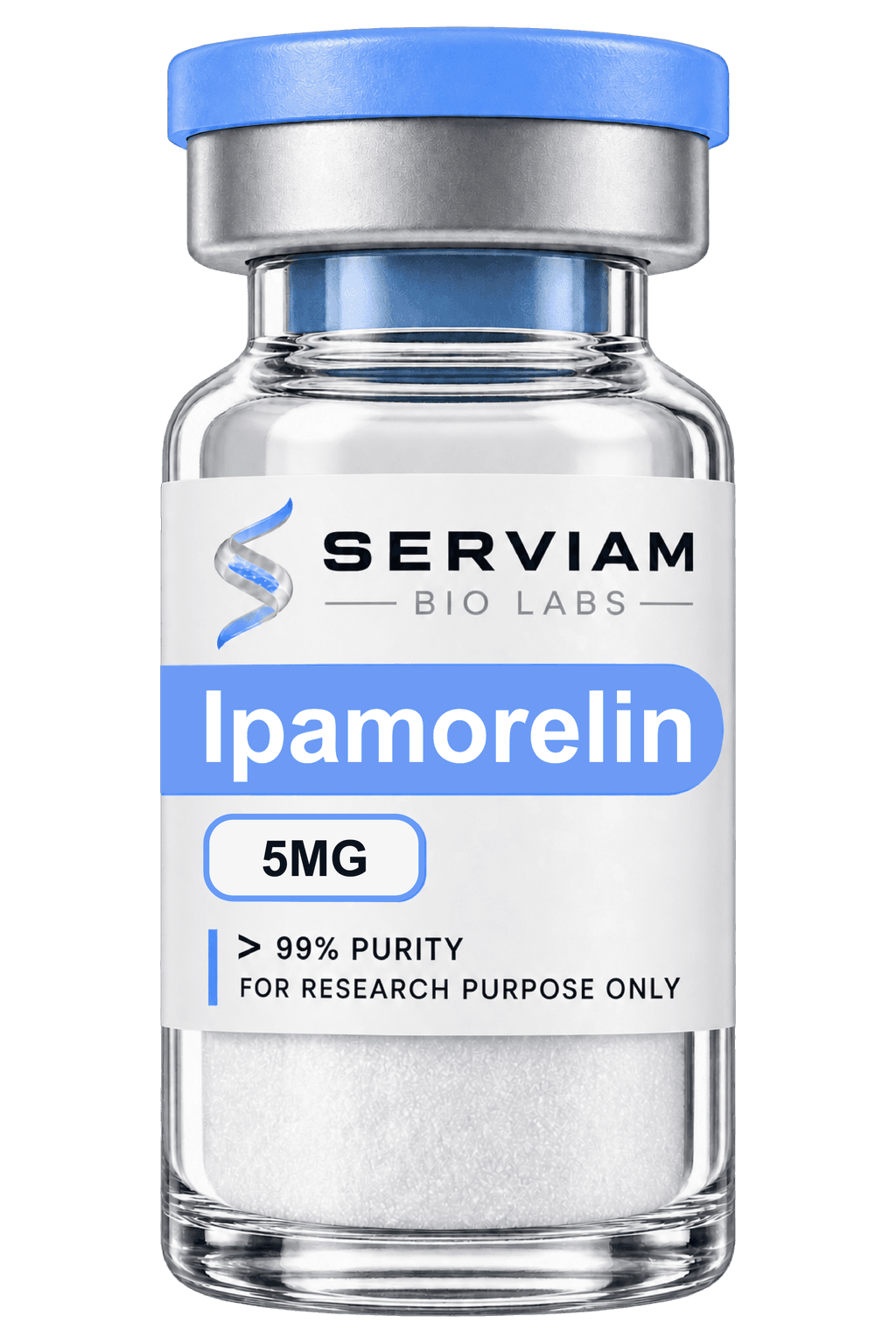
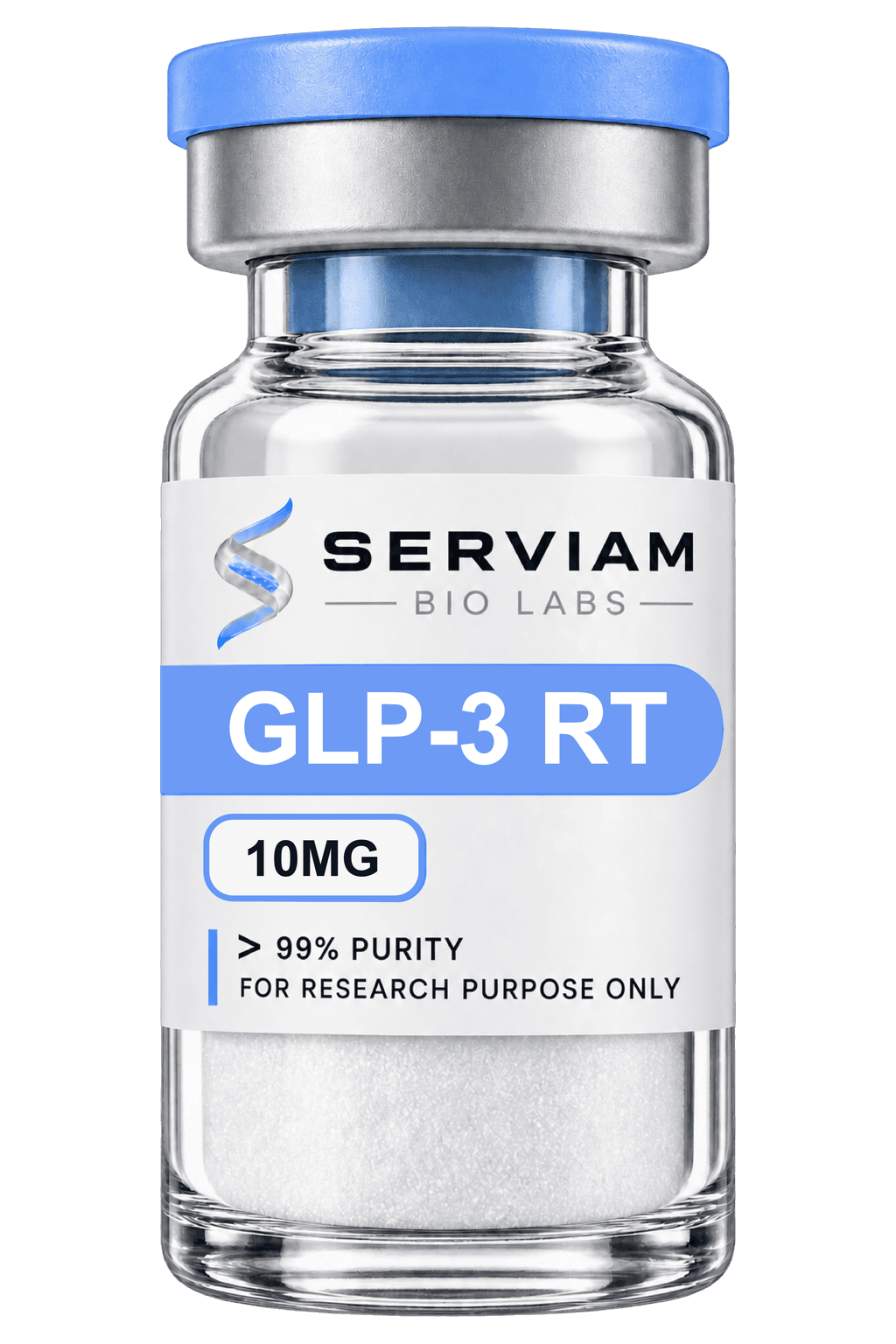
Lyophilised powder · 99%+ documented HPLC
Selective growth-hormone secretagogue and ghrelin-receptor agonist studied in GH-axis models.
$49.99per 5mg vial
Figures are structural data from our specification and certificates, or are drawn from published third-party literature about the compound, and are provided for orientation only. Nothing here is a claim about what this material does. Supplied for laboratory research use only.
Ipamorelin is a synthetic pentapeptide growth hormone secretagogue characterised by its selectivity. It is frequently cited as one of the more selective secretagogues in its class. It is supplied lyophilised with a consistently clean impurity profile by RP-HPLC.
C38H49N9O5 · composition, not conformation
Signalling pathways examined in preclinical models. Descriptive of published research directions, not claims of effect.
Characterised as an agonist at the growth hormone secretagogue receptor, studied in receptor-expressing cell preparations.
Studied for pulsatile growth-hormone release patterns in rodent models, where the shape of the release curve rather than its size is the endpoint.
A substantial part of the published characterisation concerns what Ipamorelin does not do relative to earlier secretagogues, which is the basis of its reputation for selectivity.
Growth hormone rose without a meaningful rise in cortisol, ACTH or prolactin.
Blocking experiments placed the effect at a specific receptor rather than a general one.
Strength and maximum effect were comparable to the older compound it was measured against.
Reference class characteristics for orientation. Half-life figures are typical literature values, not lot measurements.
| Compound | Receptor class | Typical half-life | Note |
|---|---|---|---|
| Ipamorelin | GHS-R1a agonist (pentapeptide) | ~2 hours | Selective, no cortisol rise |
| Tesamorelin | GHRH analogue | Short | Acts upstream at the GHRH receptor |
| GHRP-6 | GHS-R1a agonist (hexapeptide) | Short | Raises cortisol and appetite |
Milestones in the study of this compound class.
Characterised at Novo Nordisk and reported as the first selective growth hormone secretagogue of its class.
Compared against GHRP-2 on cortisol and GH secretion profiles.
Ghrelin and GHS receptor function characterised, clarifying the route it acts through.
Studied in human nocturnal sleep, where GH rose during early sleep phases without cortisol disruption.
Every lot is documented by an independent laboratory. The newest lot appears first.
| Lot | Reported | Size | HPLC | Laboratory | Certificate |
|---|---|---|---|---|---|
| VNA7TB | 12 May 2026 | 10mg | 99.90% | Freedom Diagnostics | View |
| IPA10-02242026-J | 27 Feb 2026 | 10mg | 99.657% | Freedom Diagnostics | View |
| 500001 | 20 Feb 2026 | 10mg | 99.984% | Freedom Diagnostics | View |
99.90%
HPLC purity
The signed PDF is the full certificate. The accession and search code above resolve the same record at the laboratory.
HPLC purity
RP-HPLC, 214 nm
Identity
LC-MS
Lot VNA7TB
This material is supplied as a reference standard for in-vitro laboratory research only. It has not been evaluated by the FDA, is not a drug, and is not intended for human or veterinary use. Handling should follow your institution's chemical hygiene plan, including appropriate PPE and documented disposal.
Every lot is documented at 99%+ by RP-HPLC with identity confirmed by LC-MS, run by an independent laboratory. Released lots have measured between 99.657% and 99.984%; the figure for the lot you receive is in the certificate table above.
Yes. Every lot ships with its own signed certificate, and all three are published in the COA library, including for lots no longer in stock.
5mg and 10mg vials. The certificates on file are all 10mg lots, because that is the fill size tested to date.
Aib-His-D-2-Nal-D-Phe-Lys-NH2 — five residues, three of them non-standard, which is why it is written as a modified sequence rather than a plain letter string. Note that the residue count is stated as 9 in some published summaries; 5 is what the formula C38H49N9O5 corresponds to, and what the source paper reports. Identity is confirmed lot-by-lot against a certified reference standard by LC-MS.
Published characterisation focuses on its behaviour at the growth hormone secretagogue receptor relative to its activity at related targets. In the 1998 paper, growth hormone rose without a meaningful rise in cortisol, ACTH or prolactin — the three the older compounds in its class did raise. Researchers commonly select it for that comparatively narrow profile.
Store the sealed vial at −20°C for long-term stability and 2–8°C for short-term handling. Protect from light and avoid repeated freeze-thaw cycles. Compound-specific stability data is printed on the certificate of analysis supplied with the lot.
Independent published research relating to this compound. Listed for reference; Serviam Bio Labs is not affiliated with these authors and makes no claims based on their findings.
Ipamorelin, the first selective growth hormone secretagogue
Raun K et al. · 1998 · European Journal of Endocrinology
Pharmacokinetic-pharmacodynamic modeling of ipamorelin
Gobburu JV et al. · 1999 · Pharmaceutical Research
The full reference entry: molecular data, the mechanisms described in the literature, what the research covers, the specification and the papers behind it.
For laboratory research use only. All compounds listed on this site are sold strictly as reference materials for in-vitro laboratory research conducted by qualified professionals. They are not drugs, foods, cosmetics, or medical devices. They are not intended for human or veterinary consumption, therapeutic use, diagnostic application, or any in-vivo use whatsoever. These statements have not been evaluated by the Food and Drug Administration. By purchasing, you affirm that you are a qualified researcher and that you will comply with all applicable institutional, local, state and federal regulations governing the handling of research chemicals.