

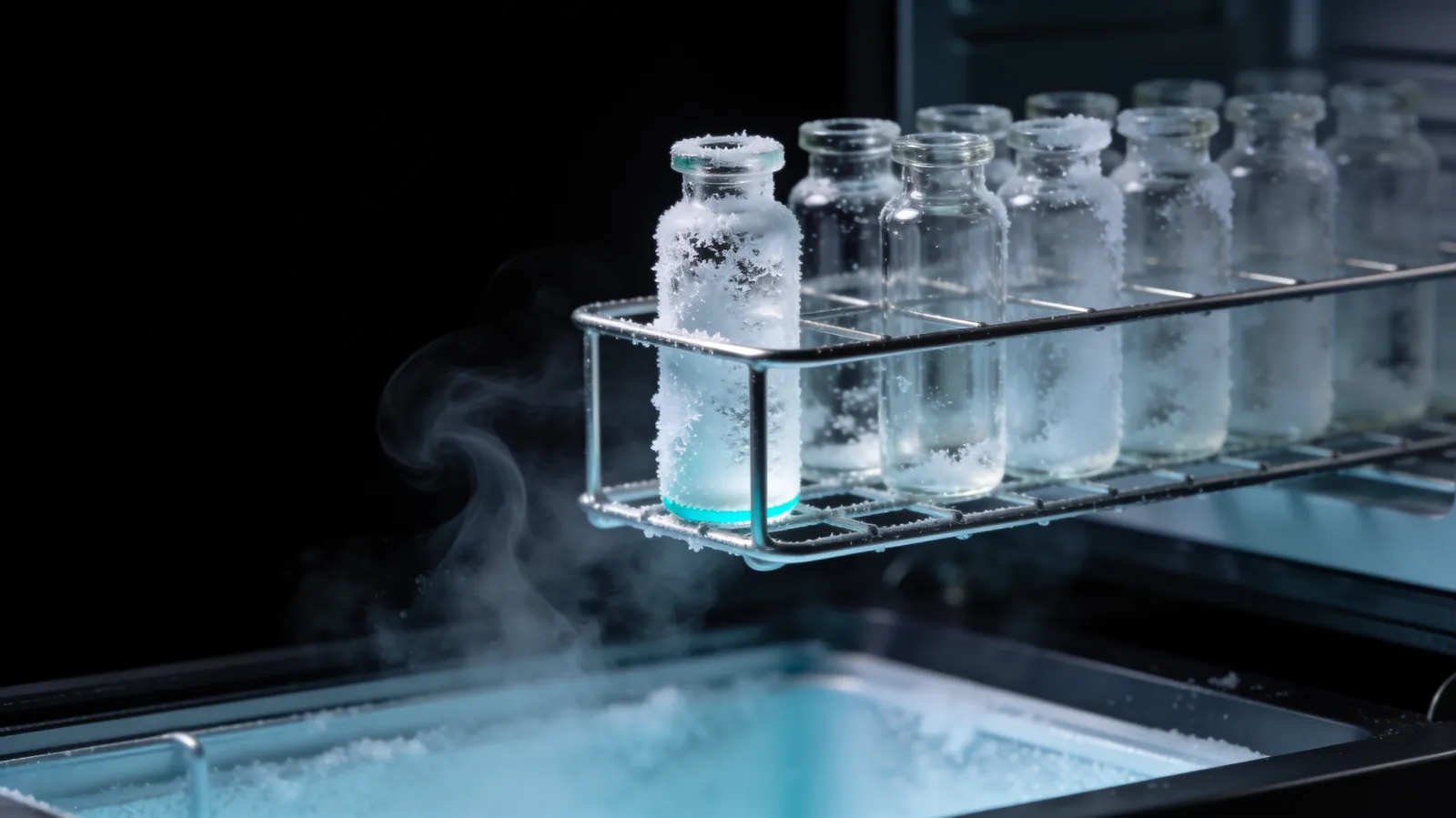
How to store peptides depends on the state the material is in. Keep lyophilised powder at −20°C (−4°F), dark and dry, where sealed vials hold for months to years. Reconstituted solution goes to 2 to 8°C (36 to 46°F) and is used within weeks, not months. Avoid repeated freeze-thaw cycles, because each one degrades a measurable fraction.
- The first rule of how to store peptides is that sealed lyophilised powder is the stable state: −20°C (−4°F) for routine storage, −80°C (−112°F) for archival, dark and dry throughout. Residual moisture costs more material than the last few degrees ever will.
- Once it is reconstituted in bacteriostatic water, the material is measured in weeks at 2 to 8°C, and no storage temperature makes a solution outlast the powder it came from.
- Every freeze-thaw cycle costs a measurable fraction and nothing looks wrong afterwards, so divide a stock into single-use aliquots and thaw each one exactly once.
- A frost-free domestic freezer warms itself several times a day to stay dry; a manual-defrost chest freezer holds −18°C (0°F) without cycling, and for sealed powder that difference matters more than the brand of the cabinet.
- Storage is only meaningful against a baseline: the lot's certificate of analysis records what the material was at release, and that is the fixed point any later assay is read against.
How to store peptides in each of their three states
A peptide exists in three states between synthesis and the bench, and each has its own rules. Lyophilised powder, sealed and dry, is the most stable form and the one it ships in. Reconstituted solution is far less stable, because water is what lets hydrolysis and oxidation proceed. In transit it is neither: warm, moving, and out of your control.
How to store peptides matters most in the second of those states. Most of the material lost in a laboratory is lost there, held too long or cycled through a freezer repeatedly, rather than in the first.
The table below is the whole answer in one grid, in both units, because laboratory literature is written in Celsius and most of the equipment sold in the United States is labelled in Fahrenheit. Everything after it is the reasoning behind a row: what the chemistry is, which sequences are most exposed to it, and which cabinet, container and diluent make the difference.
The instruction is the same across the catalogue, which is worth saying plainly: every product page on this site carries −20°C long term in its specification table, and the compounds that are routinely held in solution add 2 to 8°C in use. There is no compound in the catalogue with a storage rule of its own that contradicts the grid below.
- −20°C
- routine storage temperature for sealed lyophilised powder, equal to −4°F
- The figure published by GenScript, JPT, NIBSC and Creative Peptides, and the one printed in every specification table on this site
- 0 to 8°C
- refrigerated range for reconstituted solution, equal to 36 to 46°F
- Standard laboratory refrigeration; carried on our own product pages as “2 to 8°C in use”
- −80°C
- archival storage, equal to −112°F
- Cited for long-term storage by JPT, Creative Peptides and SB-Peptide; Bachem specifies −50°C or lower
| State of material | Temperature | In °F | Expected stability | What limits it |
|---|---|---|---|---|
| Sealed lyophilised, routine | −20°C | −4°F | Months to years | Residual moisture, not temperature |
| Sealed lyophilised, archival | −80°C | −112°F | Years | Freezer reliability and seal integrity |
| Sealed lyophilised, in transit | 15 to 25°C ambient | 59 to 77°F | Days to weeks | Sustained heat, not ordinary transit time |
| Opened vial, resealed dry | −20°C | −4°F | Weeks to months | Water pulled in at each opening |
| Reconstituted in bacteriostatic water | 2 to 8°C | 36 to 46°F | Weeks | Hydrolysis; separately, the preservative's own 28-day in-use period |
| Reconstituted, single-use aliquot frozen | −20°C | −4°F | Months | One thaw only; a refrozen tube loses the benefit |
| Reconstituted, aliquot in deep freeze | −80°C | −112°F | Up to about a year | Same proviso, plus container integrity at temperature |
Lyophilised, sealed
−20°C (−4°F) is the standard answer to how to store peptides in dry form, with −80°C (−112°F) for long-term archival. Keep it dark and dry: the vial is under vacuum or inert gas for a reason, and moisture is the variable that matters most.
Reconstituted
2 to 8°C (36 to 46°F), used within weeks. Bacteriostatic water contains a preservative that limits microbial growth; it does not stop the chemistry of hydrolysis, which continues regardless.
In transit
Lyophilised material tolerates ambient transit for days. That is why it ships dry rather than frozen, and why a warm parcel is not the emergency it appears to be.
What is actually degrading, and what each condition does to it
How to store peptides makes more sense once you know what the rules are defending against. Five chemical routes account for very nearly everything that happens to a peptide in a vial, and each one is driven by a different condition.
Hydrolysis cleaves the backbone and needs water, which is why a dry cake outlasts a solution by an order of magnitude and why residual moisture rather than temperature is usually the limiting variable in a freezer. Oxidation attacks sulfur and aromatic side chains and needs oxygen, light or a trace metal. Deamidation converts asparagine and glutamine to their acids, shifts the mass by one unit per site and runs fastest in neutral to alkaline solution. Disulfide formation and exchange affects any free cysteine thiol. Aggregation is physical rather than chemical: hydrophobic sequences associate, come out of solution and do not readily go back in.
The physical conditions map onto those routes directly. Moisture feeds hydrolysis and deamidation, and a lyophilised cake is hygroscopic enough to pull water out of room air within seconds of the stopper coming off. Oxygen and light feed oxidation, which is why vials are filled under nitrogen or argon and why amber glass exists. Temperature multiplies every rate at once. Microbial growth is a separate problem that applies only to solutions, and it is the one a preservative addresses.
Two pieces of equipment follow from that list, and both appear on most published laboratory guidance: a desiccator, or simply a sealed box with fresh desiccant in it, which handles moisture; and an inert headspace, which handles oxygen. Neither is exotic, and between them they do more for a stored powder than the difference between −20°C and −80°C. Both belong in any working account of how to store peptides, and neither costs what a second freezer costs.
Note what is missing from that list. Nothing about it is visible. Every route above proceeds without changing the appearance of the vial until it is well advanced, which is why storage is managed by condition rather than by inspection.
How to store peptides varies by sequence
None of it applies evenly. Two compounds stored side by side in the same freezer can have very different shelf lives, because what degrades is a particular side chain rather than a peptide in general. The useful question is which residues a given sequence contains, and that is readable straight off the specification.
A molecular formula with no sulfur in it has neither cysteine nor methionine, and the two most-cited oxidation routes are closed. GLP-3 RT at C221H342N46O68 and GLP-1 at C187H291N45O59 are both in that position. Tesamorelin at C221H366N72O67S carries exactly one sulfur atom across 5,135.89 g/mol: a single methionine, and no cysteine at all.
MOTS-C is the opposite case and the one to keep darkest. Its sixteen residues, MRWQEMGYIFYPRKLR, include two methionines, which is the S2 in C101H152N28O22S2, one tryptophan and two tyrosines, which is five of the most readily oxidised side chains in one short chain.
BPC-157, GEPPPGKPADDAGLV, contains no cysteine, methionine, tryptophan or tyrosine whatever. There is nothing in it for oxygen or light to attack. That is a large part of why it has a reputation as forgiving material to keep, and it is a claim about chemistry rather than about a supplier.
A blend stores to its least stable component. GLOW carries GHK-Cu, BPC-157 and TB-500 in one vial and KLOW adds KPV, so the rule for the vial is whichever component needs the most care, not an average of them.
| Residues present | What changes chemically | Storage consequence | Where it occurs here |
|---|---|---|---|
| Free cysteine (Cys) | Thiol oxidation and disulfide exchange, fastest above pH 7 and in the presence of trace metals | Mildly acidic solution, cold, low oxygen | Nowhere. No compound in the catalogue carries a free cysteine |
| Methionine, tryptophan, tyrosine | Oxidation: sulfoxide at Met, indole and phenol oxidation at Trp and Tyr | Dark storage, amber glass or an opaque box, minimal headspace air | MOTS-C with 2 Met, 1 Trp and 2 Tyr; tesamorelin with 1 Met |
| No sulfur in the formula | Neither of the two main oxidation routes is available | Temperature and moisture are the only real variables | GLP-3 RT, GLP-1, ipamorelin |
| Asparagine, glutamine | Deamidation to Asp and Glu; +1 Da per site, detectable by LC-MS | Keep dry; deamidation is a solution problem | TB-500, Ac-LKKTETQ, has a C-terminal Gln |
| Blocked N-terminus | The pyroglutamate and N-terminal degradation routes are closed | One fewer variable; the rest still apply | TB-500 is N-acetylated; ipamorelin is C-terminally amidated |
| No oxidisable residue at all | Backbone hydrolysis only | Dry storage does almost all the work | BPC-157, GEPPPGKPADDAGLV |
| Coordinated metal | Loss or incomplete coordination of Cu(II), visible as colour | Colour is a free identity check on every vial | GHK-Cu and the blends built on it, GLOW and KLOW |
| High hydrophobic fraction | Association and aggregation rather than bond cleavage | A dissolution problem before it is a storage one | Sequence-dependent; NIBSC puts the threshold near half the residues |
What freeze-thaw cycles cost, and how to store peptides in aliquots
Every freeze-thaw cycle concentrates solutes at the ice boundary and exposes the peptide to mechanical and chemical stress. The loss per cycle is small and it compounds, which is what makes it insidious: nothing looks wrong, and a later assay quietly disagrees with an earlier one.
Competitor pages in this subject quote a figure of twenty to fifty per cent loss per cycle. We are not going to repeat it, because it is asserted without a citation and it is far above what published stability work reports for buffered or lyophilised material. The honest statement is that the loss is real, measurable by assay, and dependent on the sequence and the buffer.
The practical answer, and the part of how to store peptides that is most often skipped, is aliquoting. Divide a reconstituted stock into single-use volumes at the point of preparation, so each one is thawed once. It costs a few minutes and removes the variable entirely.
Aliquot into low-binding polypropylene rather than glass if the solution is dilute. Peptide adsorbs onto surfaces, and at low concentration in a large glass vial the fraction lost to the wall stops being negligible. Polypropylene is also far less likely to fracture at −80°C than a glass vial filled near the shoulder.
A multi-vial order is where the discipline pays most, because it has to be decided once and applied to everything. A repair panel or a growth reference panel arrives lot-matched and dispatched together, and aliquoting the whole set the same way on the same day is what keeps later results comparable across it.
Choosing a freezer, and why frost-free is the wrong one
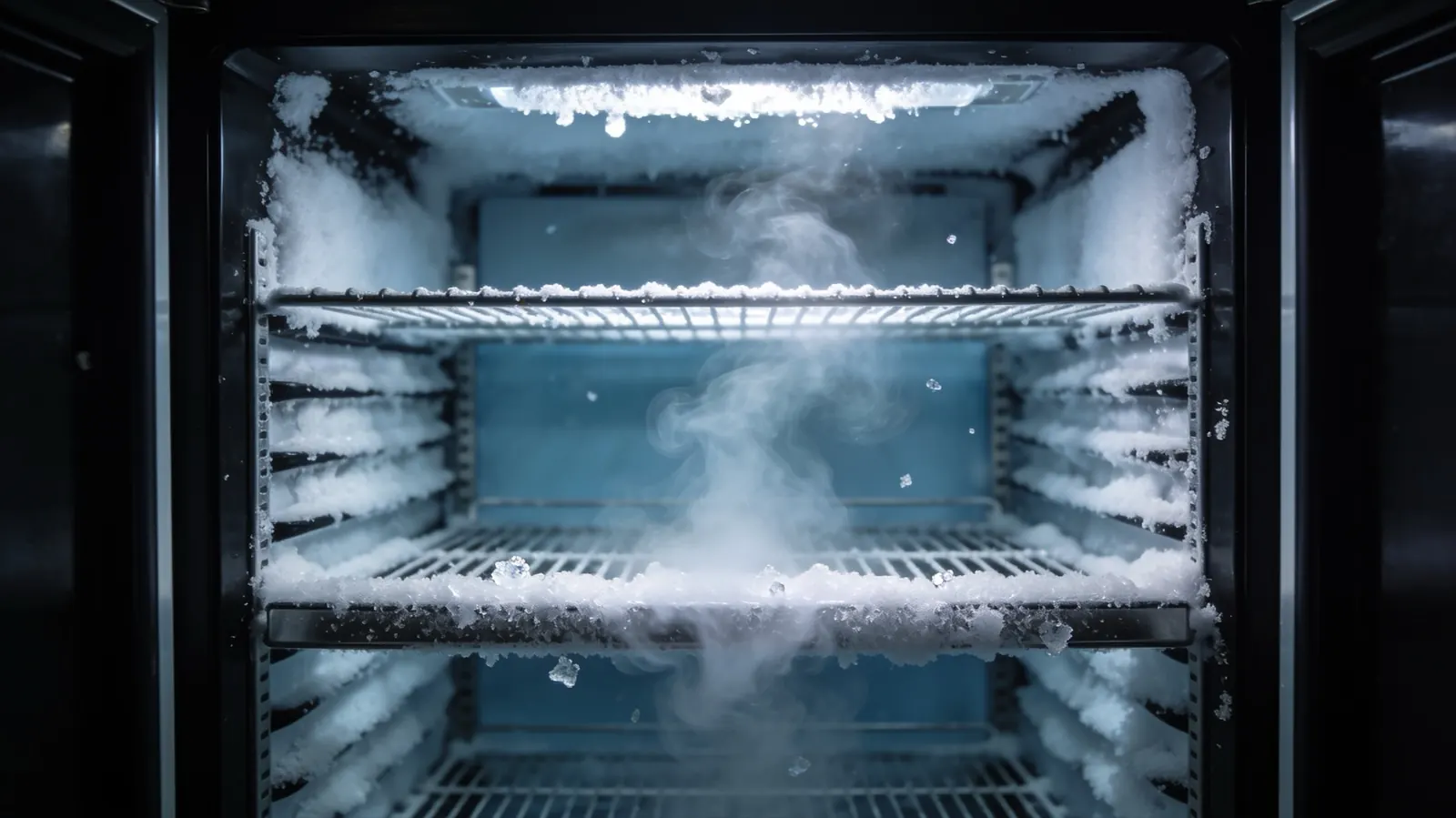
A domestic freezer runs at roughly −18°C, or 0°F, which is close enough to −20°C that the temperature itself is not the problem. The problem is how the cabinet holds that average.
Most modern upright freezers are frost-free. They stay dry by warming the evaporator on a cycle several times a day, and the cabinet warms with it. The setpoint is an average rather than a floor. Anything stored in one is being taken through a slow, repeated, low-amplitude freeze-thaw for as long as it sits there, which is precisely the process aliquoting exists to avoid, applied continuously and invisibly.
A manual-defrost chest freezer has no such cycle, holds its temperature better when opened because cold air sits in the well rather than falling out of the door, and costs a fraction of a laboratory unit. For sealed lyophilised material it is the sensible domestic answer. Whatever the cabinet, keep vials sealed and boxed: a domestic freezer carries far more water vapour than a laboratory one, and moisture is the variable that actually decides shelf life.
The same reasoning applies one appliance up. A refrigerator door is the warmest and most disturbed part of the unit, because it swings through room air every time it is opened and it vibrates, so refrigerated solution belongs at the back of a middle shelf, not in the door rack.
- −18°C
- the standard domestic freezer setpoint, which is 0°F
- Appliance convention; two degrees off the −20°C laboratory figure, and not the reason to avoid one
- 0 to 25°C
- controlled room temperature, equal to 68 to 77°F
- USP definition of controlled room temperature, 20 to 25°C with permitted excursions to 15 to 30°C, the storage condition for the diluent rather than the powder
| Freezer type | Typical temperature | Auto-defrost cycle | Effective cycling | Sealed powder | Aliquoted solution |
|---|---|---|---|---|---|
| Domestic frost-free upright | −18°C / 0°F | Yes, several times daily | Continuous low-amplitude freeze-thaw | Workable if sealed and boxed | Poor: the cycling defeats the point of freezing |
| Domestic chest freezer, manual defrost | −18 to −24°C / 0 to −11°F | No | Only when opened | Good | Good |
| Bar or mini freezer | −12 to −18°C / 10 to 0°F | Varies by model | Poor temperature stability, frequent door use | Marginal | Not recommended |
| Laboratory −20°C, manual defrost | −20°C / −4°F | No | None in normal use | Ideal | Ideal |
| Ultra-low freezer | −80°C / −112°F | No | None | Archival | Archival, container permitting |
Containers, closures and the “peptide storage case”
The original vial is usually the best container the material will ever be in. It is borosilicate glass, filled under vacuum or an inert gas, and closed with a butyl stopper under an aluminium crimp, a seal more gas-tight than any screw cap achieves. The first rule of containers is not to move material out of it without a reason.
Once there is a reason, and aliquoting is the usual one, two properties decide the choice. The first is adsorption: peptide sticks to surfaces, and at dilute concentration the fraction lost to a tube wall is measurable, which is what low-binding polypropylene exists for. The second is closure integrity at temperature. A gasket that seals at room temperature may not seal at −80°C, and a cap that holds liquid in can still pass water vapour over months.
The storage case sold as a peptide accessory deserves a plain answer, because it is the most-searched part of this subject and the most misunderstood. A foam-lined case with a silicone gasket is an organiser and a shock absorber. It is not a preservation device: it does not cool, it does not exclude oxygen, and its gasket does not do what a crimped stopper does. It is genuinely useful for keeping labelled vials together, upright and unbroken on a freezer shelf or in a cool bag, and it is no substitute whatever for the temperature. A case organises the vials; how to store peptides is still decided by the cabinet they sit in.
The one thing an inexpensive case does very well is exclude light, because it is opaque. For a sequence like MOTS-C, with five oxidisable side chains, that is worth having, and an opaque box on a freezer shelf achieves what amber glass achieves.
| Container | Material | Closure integrity | Adsorption when dilute | Light protection | Freezer-safe |
|---|---|---|---|---|---|
| Original vial, crimped stopper | Borosilicate glass, butyl stopper | Highest: sealed under vacuum or inert gas | Low at supplied concentration | Amber glass yes, clear glass no | Yes |
| Clear glass vial, screw cap | Soda-lime or borosilicate glass | Moderate; passes vapour over months | Low to moderate | None | Risk of fracture when filled full |
| Low-binding polypropylene microtube | Treated polypropylene | Good with an O-ring cap | Lowest: this is what it is for | None unless amber | Yes, to −80°C |
| Standard polypropylene tube | Polypropylene | Moderate | Measurable at low concentration | None | Yes, to −20°C |
| Gasketed storage case | ABS or EVA shell, foam insert, silicone gasket | Organiser, not a seal | Not applicable: holds vials, not liquid | Good, it is opaque | Yes, though gaskets stiffen |
| Foam-lined shipping box | Card and foam | None | Not applicable | Good | Transit only |
How long each form actually lasts
Sealed lyophilised material at −20°C is stable for months to years, and the limiting factor is almost always residual moisture rather than temperature. A well-dried vial kept dry outlasts a poorly dried one at the same temperature, which is why water content appears on a thorough peptide certificate of analysis at all.
Reconstituted solution at 2 to 8°C is a matter of weeks. Water is what allows hydrolysis to proceed, and a preservative in the diluent addresses microbial growth rather than chemistry. There is no temperature at which a solution outlasts the powder it came from.
Frozen aliquots of solution sit in between: months at −20°C, longer at −80°C, provided each aliquot is thawed exactly once. That proviso is the whole benefit, and it disappears the moment a tube goes back into the freezer.
Published supplier figures agree closely enough to be worth setting out side by side. They are storage data for reagent material, they vary with sequence and buffer, and they are attributed below to whoever published them rather than presented as ours.
None of these numbers is a substitute for measuring. They describe what to expect, and the lot's own certificate describes where the material started, which is the only fixed point a later assay can be read against.
| Condition | Published figure | Source | What it assumes |
|---|---|---|---|
| Solution at +4°C / 39°F | 1 to 2 weeks | SB-Peptide, stated as generally accepted | Buffered, sterile, kept dark |
| Solution at −20°C / −4°F | 3 to 4 months | SB-Peptide | Aliquoted; one thaw per tube |
| Solution at −80°C / −112°F | About 1 year | SB-Peptide | Aliquoted; container rated for the temperature |
| Solution at room temperature | Several days | Creative Peptides | A working window, not storage |
| Lyophilised at room temperature | Several months | Creative Peptides | Sealed and dry throughout |
| Lyophilised at −20°C / −4°F | Years | Creative Peptides; corroborated across the supplier set | Sealed, desiccated, dark |
| Lyophilised, long-term threshold | Below −15°C, with −50°C or lower preferred | Bachem | Manufacturer guidance for its own material |
The diluent is not neutral: pH, preservative and whose clock is running
Once a peptide is in solution, the water around it sets the rate of most of the chemistry described above, and the published guidance converges on a window. GenScript and NIBSC specify pH 5 to 6 for stored solutions; SB-Peptide and Creative Peptides give pH 5 to 7; JPT recommends pH 4 to 6 to limit aggregation and deamidation. Bachem's general suggestion is phosphate-buffered saline at pH 7.0 to 7.4, at 1 mg/mL or below. The common ground is mildly acidic to neutral. Alkaline is where cysteine, asparagine and glutamine move fastest, and it is the condition to avoid.
Bacteriostatic water is sterile water carrying 0.9% benzyl alcohol as a preservative, 0.2µm filtered, and that preservative is the only thing that separates it from plain sterile water. It addresses microbial growth in a container that will be opened more than once. It does nothing about hydrolysis, oxidation or deamidation, which proceed at the same rate either way.
The 28-day figure attached to it belongs to the water, not to the peptide. It is the default beyond-use date USP General Chapter <797> applies to an entered multiple-dose container, reinforced by CDC injection-safety guidance, rather than anything derived from a peptide stability study. It is not on the FDA label for the reference product, which does not carry the number at all. The clock starts when the closure is first entered. Non-preserved sterile water carries no such window at all, which is why unpreserved solutions are treated as short-lived: sterile water vs bacteriostatic water is a microbiological difference before it is a chemical one.
The water has its own storage rule, and it is not the peptide's. Controlled room temperature, 20 to 25°C or 68 to 77°F, with permitted excursions to 15 to 30°C, upright, out of direct light, and not frozen, because freezing stresses the container closure rather than the liquid. Bacteriostatic water storage sets that out in full, and bacteriostatic water for peptides covers why it is the default diluent for lyophilised material.
- 0%
- benzyl alcohol, the preservative concentration in USP bacteriostatic water
- The labelled concentration for USP Bacteriostatic Water, and the figure on our own product specification
- 0 days
- in-use period for a preserved multi-dose container, counted from first entry
- USP General Chapter <797> default beyond-use date, reinforced by CDC injection-safety guidance: a limit on the water, not on any peptide
- 0µm
- filtration grade for the diluent, and the standard for clarifying a stored solution
- Our own supply specification; GenScript gives the same figure for removing bacterial contamination from solutions
The diluent decides the solution's clock
Sterile water with 0.9% benzyl alcohol, USP-grade and 0.2µm filtered, in 3ml and 10ml vials. It is the reason the diluent vial can be entered more than once within a 28-day in-use period rather than being finished at first puncture.
See bacteriostatic waterHow to store peptides once the vial has been opened
Let a vial reach room temperature before opening it. Cold glass pulls moisture out of the air and condensation lands directly on the powder, which is the one thing dry storage exists to prevent.
Work quickly once it is open, and reseal it. A lyophilised cake is hygroscopic, and the exposure that matters is measured in seconds of room air rather than hours on the bench. If material is being weighed out, weigh in as dry an environment as you have and return the stock vial to the freezer before doing anything further with the portion taken.
Dissolve gently. Swirling and slow inversion bring a cake into solution without shear; vigorous shaking introduces air and foam, and foam is an air-water interface, which is where peptides unfold and aggregate. Where a sequence resists, a sonication bath is the standard escalation and is still gentler than shaking. Hydrophobic sequences that will not go into water are a solubility problem rather than a storage one, and the laboratory answer is a different solvent first: 0.1% acetic acid, dilute ammonia for acidic peptides, or a small volume of DMSO or acetonitrile, before water is added.
Keep material out of light, particularly compounds containing tryptophan, tyrosine or methionine, which are the residues most readily oxidised. Amber vials and a closed box do most of that work. Static is a genuine nuisance with freeze-dried solids, which will climb a plastic spatula given the chance; glass and a grounded surface help.
Label every aliquot with the compound, the concentration, the lot and the date it was prepared. The concentration written there is mass over volume in that vial, and the peptide calculator works it out from the vial strength in mg and the diluent volume in mL. Storage discipline fails at identification long before it fails at temperature, and an unlabelled tube has already defeated everything else in this article.
How to tell whether material has degraded
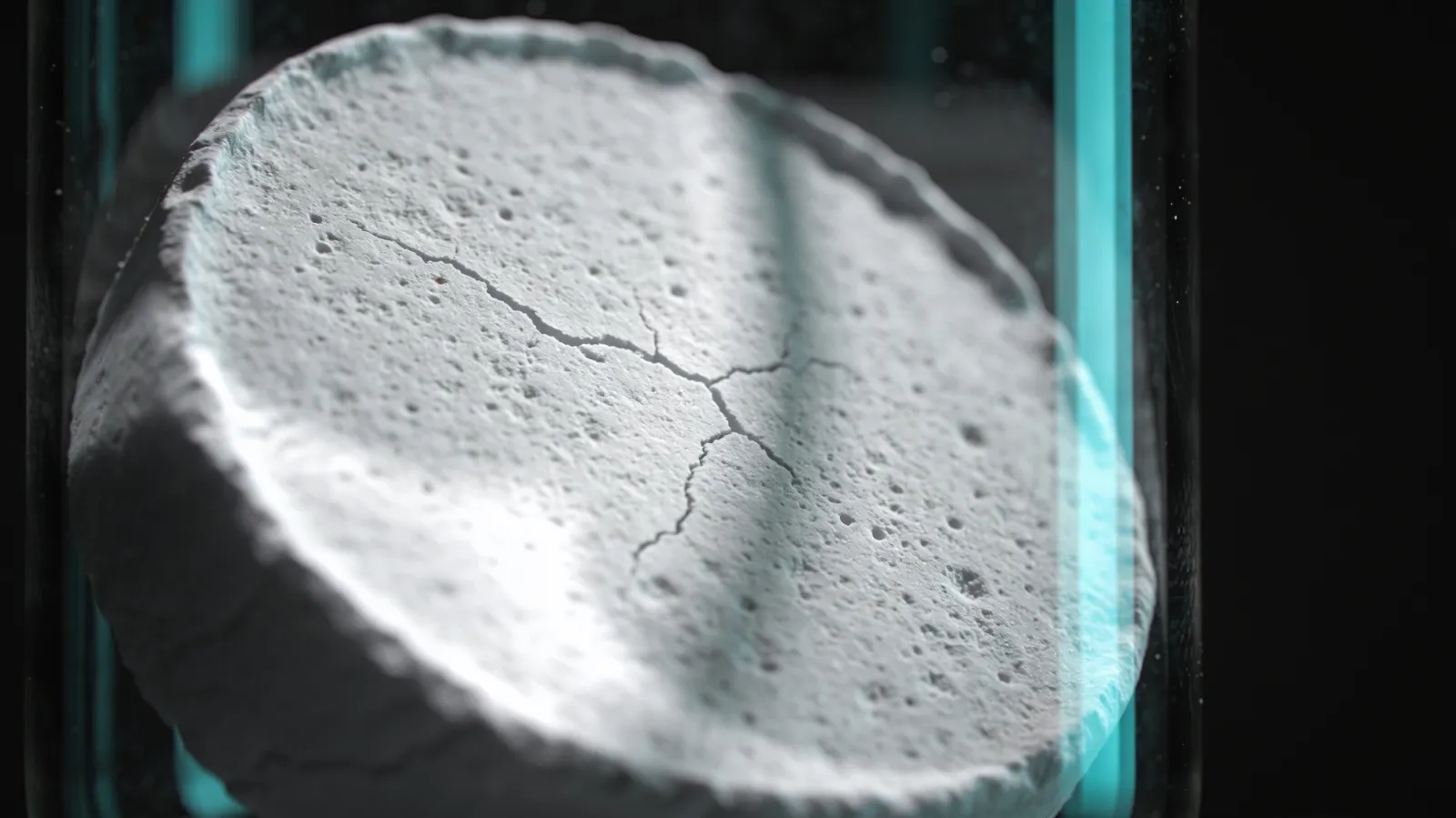
Mostly you cannot, and that is the honest answer. A sound lyophilised cake is white, or deep blue for GHK-Cu where the copper complex is the colour, and it is dry, porous, and either intact or shaken loose inside the vial. Clumping, stickiness, shrinkage, or a cake that has slumped into a glassy film means moisture has reached it. Yellowing points at oxidation. In solution, cloudiness, visible particulate or a film on the glass means aggregation or contamination.
Colour is the one readout that comes free, and only for some compounds. GHK-Cu is blue because copper(II) is coordinated by the tripeptide; every certificate we hold records the appearance as a blue lyophilised powder, and a pale or colourless lot indicates incomplete complexation rather than a lighting problem. The same applies to the blends built on it.
What none of this catches is the case that matters. A lot that has lost two per cent purity looks exactly like a lot that has not. Purity is invisible in the vial. The only way to know is to assay the material and read the result against the figure the lot was released at, which is what peptide purity testing measures and what a peptide certificate of analysis records.
The two methods answer different questions. RP-HPLC at 214 nm gives the purity figure, because it separates the intact peptide from everything that is no longer it. LC-MS confirms identity by mass, which is how deamidation is caught: it adds one mass unit per site and changes nothing you can see.
Storage is measured against a release figure
Every lot we ship is assayed by an independent laboratory and its certificate published, including lots long out of stock. That document is what a later assay of your own material is compared against.
Open the certificate libraryTransit, and what a warm parcel really means
The most common anxiety about storage is not about storage at all. It is a parcel that has spent three days in a hot van, and the answer is usually that it does not matter much.
Lyophilised material ships dry for exactly this reason. Sealed powder tolerates ambient conditions for days, because the route temperature accelerates most is hydrolysis, and hydrolysis needs water that a dried cake does not contain. Standard ground transit of three to seven days at ambient temperature is not the exposure people picture when they feel a warm box.
There is a limit, and it is worth naming rather than glossing. Sustained heat accelerates every route at once, and the interior of a parked car in summer sun is documented to exceed 60°C, or 140°F, which is a genuinely different exposure from a warm porch or a warm van. A parcel left in a vehicle for an afternoon is worth noting on the label; an ordinary warm delivery is not.
How orders are packed and shipped is the same logic applied at our end: dry, sealed, and documented, so that the state the material arrives in is the state it was released in. How to store peptides on arrival is two steps in order: bring the vial to −20°C, and let it come fully back to room temperature before it is opened for the first time. Those two steps, in that order, cover almost every transit scenario anyone writes in about.
Why the lot number matters to storage
How to store peptides well assumes you know what you started with. A certificate of analysis records peptide purity for a specific lot at the point of release. That is your baseline, and without it a later measurement has nothing to be compared against.
Every batch we release is assayed by an independent laboratory and the certificate published against the lot number printed on the vial, so the material in your freezer can always be traced back to its own data.
That is also what makes an excursion recoverable rather than simply worrying. A vial left out overnight, a parcel that arrived hot, a freezer that failed over a weekend: none of these is answerable by looking at the vial, and all of them are answerable by assay against the release figure. Note the excursion on the label, keep the lot number, and match the vial to its certificate when you want to settle it. If the supplier cannot produce that document, there is nothing to settle it against, which is the first of the checks in vetting a research peptide supplier.
How to store peptides comes down to four habits: keep lyophilised material cold, dark and dry, in a freezer that does not defrost itself; refrigerate reconstituted solution and use it promptly; aliquot so that nothing is frozen and thawed twice; and label every tube with the lot it came from. Do those and the compound you assay is the compound you received, which is the only way the numbers on its certificate still mean anything.
Common questions
What temperature should lyophilised research peptides be stored at?
−20°C (−4°F) for routine storage, −80°C (−112°F) for long-term archival, kept dark and dry. Sealed lyophilised material is stable for months to years at those temperatures, and that is the short answer to how to store peptides in dry form.
How should peptides be stored?
By state, and that is the whole of how to store peptides. Sealed powder goes to −20°C, dark and dry, ideally with desiccant and in a freezer that does not auto-defrost. Reconstituted solution goes to 2 to 8°C and is used within weeks, or is aliquoted and frozen so that each tube is thawed once. The diluent itself stays at controlled room temperature, which bacteriostatic water storage sets out in full, and it is the one item in the set that should not be refrigerated.
How long does a reconstituted peptide last?
Refrigerated at 2 to 8°C, weeks rather than months: SB-Peptide publishes 1 to 2 weeks at +4°C as generally accepted for reagent solutions. Solution is far less stable than powder because water enables hydrolysis, and a preservative in the diluent does not change that.
Do peptides go bad if not refrigerated?
Sealed lyophilised powder does not go bad at room temperature in any short window; Creative Peptides puts dry material at several months at room temperature, and it is shipped ambient for that reason. Solution is the opposite case and belongs at 2 to 8°C from the moment it is mixed. What ruins dry powder is moisture and sustained heat, not an afternoon on a bench.
Which peptides should not be refrigerated?
None of the lyophilised compounds are harmed by cold; the question usually means the diluent. Bacteriostatic water is kept at controlled room temperature, 20 to 25°C or 68 to 77°F, with permitted excursions to 15 to 30°C, upright and out of direct light, and should not be frozen, because freezing stresses the closure rather than the liquid.
Does a warm parcel mean the peptide is ruined?
Usually not. Lyophilised material tolerates ambient transit for days, which is why it ships dry. Return it to −20°C on arrival and use the lot's certificate as your reference point. A parcel that sat in a closed car in summer sun is a different matter, since vehicle interiors are documented above 60°C.
How many freeze-thaw cycles are acceptable?
As few as possible, and ideally one. Each cycle degrades a measurable fraction. Aliquot a reconstituted stock into single-use volumes so no vial is thawed twice. Figures of twenty to fifty per cent loss per cycle circulate in this subject without any citation behind them; the effect is real, but that number is not one we will repeat.
do peptides need refrigerated or is room temperature ok?
Sealed lyophilised powder tolerates room temperature for days, which is why it is shipped dry rather than frozen. Anything longer than that belongs at −20°C, dark and dry. Reconstituted solution is the opposite case: it goes to 2 to 8°C from the moment it is mixed and stays there.
can you store research peptides in a normal kitchen freezer?
A domestic freezer runs at roughly −18°C (0°F), so the temperature itself is close enough to −20°C not to be the issue. The issue is that most modern freezers are frost-free, and they hold that average by warming in cycles through the day, which is a slow and repeated freeze-thaw. That is where how to store peptides most often goes wrong at home. A chest freezer or a small laboratory freezer without an auto-defrost cycle is the better choice, and everything in it should be sealed against the moisture a domestic freezer carries.
does a peptide storage case keep peptides cold?
No. A gasketed foam-lined case is an organiser and a shock absorber: it holds labelled vials upright and unbroken, and being opaque it protects them from light. It does not cool, it does not exclude oxygen, and its silicone gasket is not the seal a crimped stopper is. Use one inside a freezer or a cool bag, never instead of one.
does bacteriostatic water need to be kept in the fridge too?
No. Bacteriostatic water is kept at controlled room temperature, upright and out of direct light, and it should not be frozen, because freezing stresses the container closure rather than the liquid. Its clock also runs separately from the peptide's: the widely used in-use period of 28 days starts when the stopper is first entered.
Do peptides really go bad after 30 days?
The figure people have in mind is 28 days, and it belongs to the water rather than to the peptide. It is the default beyond-use date USP General Chapter <797> applies to an entered multiple-dose container, reinforced by CDC injection-safety guidance, and it is not on the FDA label for the reference product at all. It says nothing about how much intact peptide is left, which is a separate question answered by assay.
What pH should a stored peptide solution be at?
Mildly acidic to neutral. GenScript and NIBSC specify pH 5 to 6, SB-Peptide and Creative Peptides pH 5 to 7, and JPT pH 4 to 6 to limit aggregation and deamidation; Bachem suggests phosphate-buffered saline at pH 7.0 to 7.4 at 1 mg/mL or below as a general-purpose option. Alkaline conditions are the ones to avoid, because thiol oxidation and deamidation both accelerate above pH 7.
Do I need a desiccator, or is the sealed vial enough?
An unopened vial is sealed under vacuum or inert gas and needs nothing added. A vial that has been opened is a different object, and that is where a desiccator, or simply a sealed box with fresh desiccant, earns its place. Residual moisture rather than temperature is what usually limits a powder's shelf life.
how can you tell if a peptide has gone bad?
Mostly you cannot, and that is the honest answer. Gross signs exist: a cake that has clumped, gone sticky or discoloured usually means moisture has reached it, and a cloudy solution means something is wrong. A loss of purity, though, is invisible in the vial. The only way to know is to assay the material and read the result against the lot's release figure, which is what peptide purity testing is for.
what if a vial was left out of the freezer overnight by mistake?
For sealed lyophilised powder, one warm night is not the emergency it feels like: dry material tolerates ambient conditions for days. Let it come fully to room temperature before opening, return it to −20°C, and note the excursion on the label so a later result can be read in that light. Reconstituted solution is less forgiving, because a night at room temperature counts against a shelf life already measured in weeks.
How long does a vial of BPC-157 last in storage?
As stored material rather than as a usage period: sealed and lyophilised at −20°C, months to years, and BPC-157 is at the forgiving end of the range because its sequence, GEPPPGKPADDAGLV, contains no cysteine, methionine, tryptophan or tyrosine for oxygen or light to attack. Once in solution it is measured in weeks at 2 to 8°C like anything else.
do research peptides have an expiry date?
Not in the way a formulated medicine does. A peptide certificate of analysis records the purity of that lot on the day it was released, and what happens after that depends on how the vial has been kept: sealed at −20°C, months to years is the usual expectation. Treat the release date as the point a later measurement is compared against, not a deadline.
can reconstituted peptide be frozen instead of kept in the fridge?
Frozen aliquots sit between powder and refrigerated solution: SB-Peptide publishes 3 to 4 months at −20°C and about a year at −80°C. The whole benefit rests on one condition, that each aliquot is thawed exactly once, so the stock has to be divided before it goes in, not after. A tube returned to the freezer once opened has given back the advantage freezing bought.
my vial looks empty, where is the peptide?
A 5 or 10mg cake is a very small amount of solid, and freeze-drying leaves it porous and pale, so it often reads as a faint film rather than a visible powder. Transit can also shake the cake loose, onto the stopper or the side wall. Tilt it against the light before assuming anything is wrong; what lyophilized powder is describes what a sound cake looks like.
how do I know a supplier stores and ships peptides properly?
Ask before ordering and look for specific answers: what temperature stock is held at, whether it ships lyophilised, and how a parcel is packed. Then check what you can verify yourself, because a published certificate tied to the lot number on the vial is a claim that can be tested and a promised one is not. Vetting a research peptide supplier sets the checks out in order, and every lot we ship can be matched to its certificate by lot number.
what is the single most common storage mistake?
Keeping reconstituted solution in a frost-free freezer. It combines the two failures this article is about: the cabinet cycles above and below freezing several times a day, and the stock was never divided into single-use aliquots, so every tube takes every cycle. Sealed powder in the same freezer is largely unaffected, which is why how to store peptides has to be answered by state rather than by appliance.
- Bacteriostatic Water for Injection, USP: FDA label (DailyMed): the benzyl alcohol preservative in the diluent and its multiple-dose designation
- Sterile Water for Injection, USP: FDA label (DailyMed): that unpreserved water carries no antimicrobial agent, which is why a solution made with it is treated as short-lived
- FDA, Lyophilization of Parenteral: Inspection Technical Guide: residual moisture as the variable a freeze-dried product is judged on, and the cake defects inspection looks for
- ICH Q6A, Specifications: Test Procedures and Acceptance Criteria (FDA): the idea of a release specification, which is the baseline any later assay of stored material is read against
- PubChem CID 146675088, MOTS-c: the MOTS-c sequence and molecular formula behind the count of oxidisable residues in that vial
Read more
- What lyophilized powder isLyophilized powder, lyophilised in British spelling, is what almost every peptide arrives as. The process behind it explains most of how the vial should be treated.
- Peptide purity, and what the percentage measuresPeptide purity is quoted as a single number on every listing in this category. That number is measuring something quite specific, and it is not what most buyers assume.
- How to read a peptide certificate of analysisA peptide certificate of analysis is the only document that connects the vial in your hand to a measurement. Most buyers glance at one number on it and miss the three that matter.
- Bacteriostatic water for peptidesBacteriostatic water for peptides is the default diluent for a straightforward reason: it is the only one that lets a multi-milligram vial be used more than once.
- Bacteriostatic water storage and shelf lifeBacteriostatic water storage is simpler than most people expect, and the 28-day figure everyone quotes is measuring something quite specific.
- Sterile water vs bacteriostatic waterSterile water vs bacteriostatic water is a question about one ingredient and one consequence: whether the vial can be opened more than once. The labels answer it in figures.
For laboratory research use only. All compounds listed on this site are sold strictly as reference materials for in-vitro laboratory research conducted by qualified professionals. They are not drugs, foods, cosmetics, or medical devices. They are not intended for human or veterinary consumption, therapeutic use, diagnostic application, or any in-vivo use whatsoever. These statements have not been evaluated by the Food and Drug Administration. By purchasing, you affirm that you are a qualified researcher and that you will comply with all applicable institutional, local, state and federal regulations governing the handling of research chemicals. Published by SERVIAM BIO LABS.