

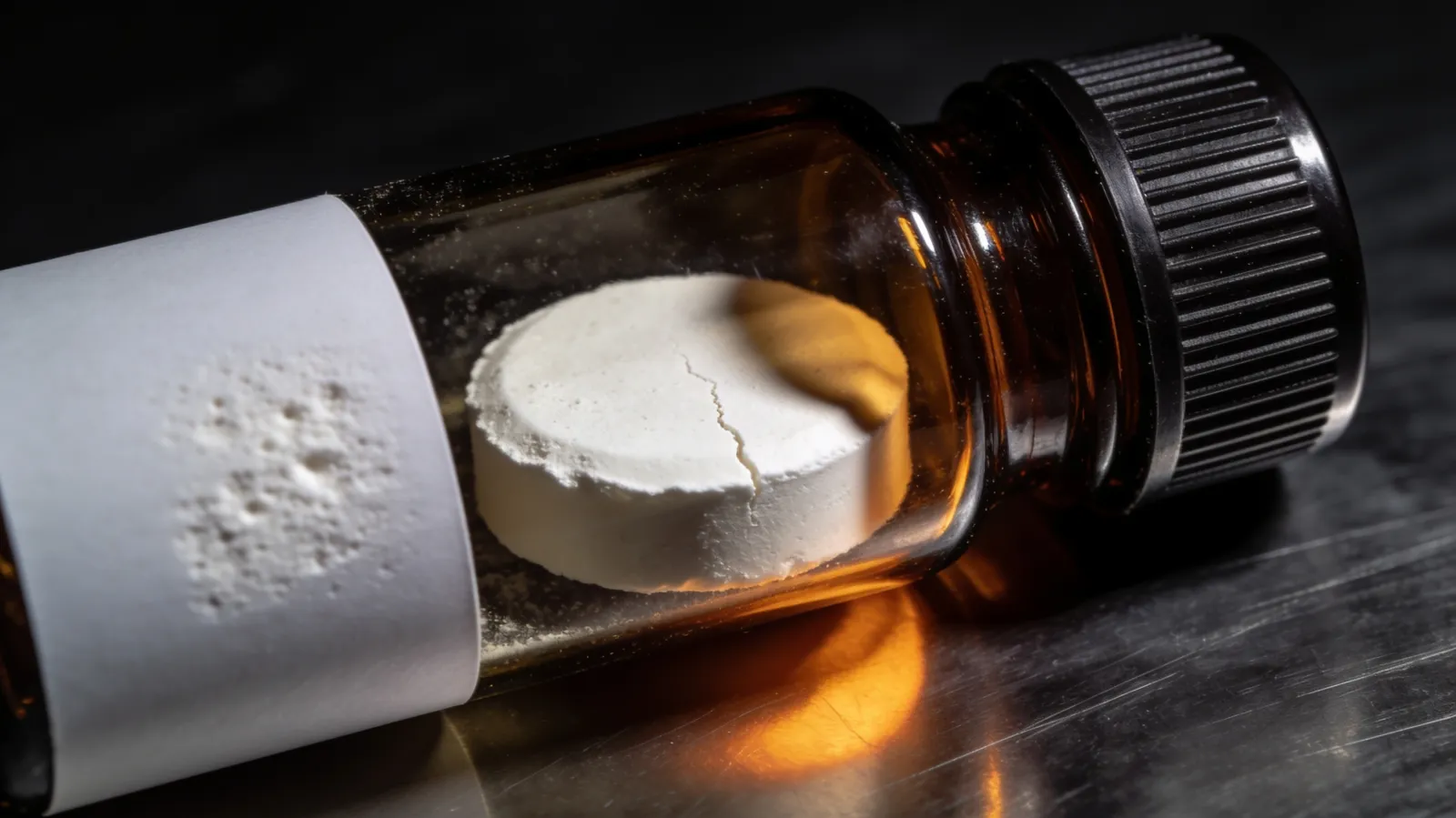
The BPC-157 peptide is a synthetic pentadecapeptide, sequence GEPPPGKPADDAGLV, formula C62H98N16O22, molecular weight 1419.53 g/mol, CAS 137525-51-0. Its sequence corresponds to a fifteen-residue region of a larger protein found in gastric juice and designated Body Protection Compound. The fragment itself does not occur free in nature. It is studied in preclinical wound-healing, gastrointestinal and connective-tissue model systems.
- The BPC-157 peptide is fifteen amino acids long, GEPPPGKPADDAGLV, with the molecular formula C62H98N16O22, a molecular weight of 1419.53 g/mol and the registry number CAS 137525-51-0.
- The BPC-157 peptide travels under several names. BPC stands for Body Protection Compound; the same fifteen residues also appear in the literature and in listings as BPC 15, PL 14736, PL-10, Bepecin and "stable gastric pentadecapeptide BPC 157".
- Seven of the fifteen residues are proline or glycine, which is an unusual composition for a chain this short and the reason its backbone is more constrained than its length suggests. Three acidic side chains against a single lysine make it acidic and strongly hydrophilic.
- Salt form changes what a label means. A vial marked 10mg holds peptide plus counter-ion plus residual water, so net peptide content in milligrams is the figure that says how much BPC-157 peptide is actually there.
- Purity belongs to a lot rather than to a compound, so the figure worth reading is the one on the certificate for the lot number printed on the vial. Three BPC-157 peptide lots are published in full in the certificate of analysis library.
The BPC-157 peptide, in specification terms
The BPC-157 peptide is fifteen amino acids in a single unbranched chain: glycine, glutamate, proline, proline, proline, glycine, lysine, proline, alanine, aspartate, aspartate, alanine, glycine, leucine, valine. Written in single letters that is GEPPPGKPADDAGLV. The molecular formula is C62H98N16O22, the molecular weight 1419.53 g/mol, and the registry number CAS 137525-51-0. Fifteen residues makes it a pentadecapeptide, and that word and the abbreviation both turn up in the literature for the same molecule. Reading a sequence letter by letter, and counting residues off it, is the method set out in what is a peptide.
The sequence is written without a terminal modification. There is no N-terminal acetyl group and no C-terminal amide, so both ends of the chain are free. That is worth noting because short research peptides are often supplied N-acetylated, and an acetyl group is written into the sequence rather than left implied. The side-by-side in BPC-157 vs TB-500 sets out one such pair in full.
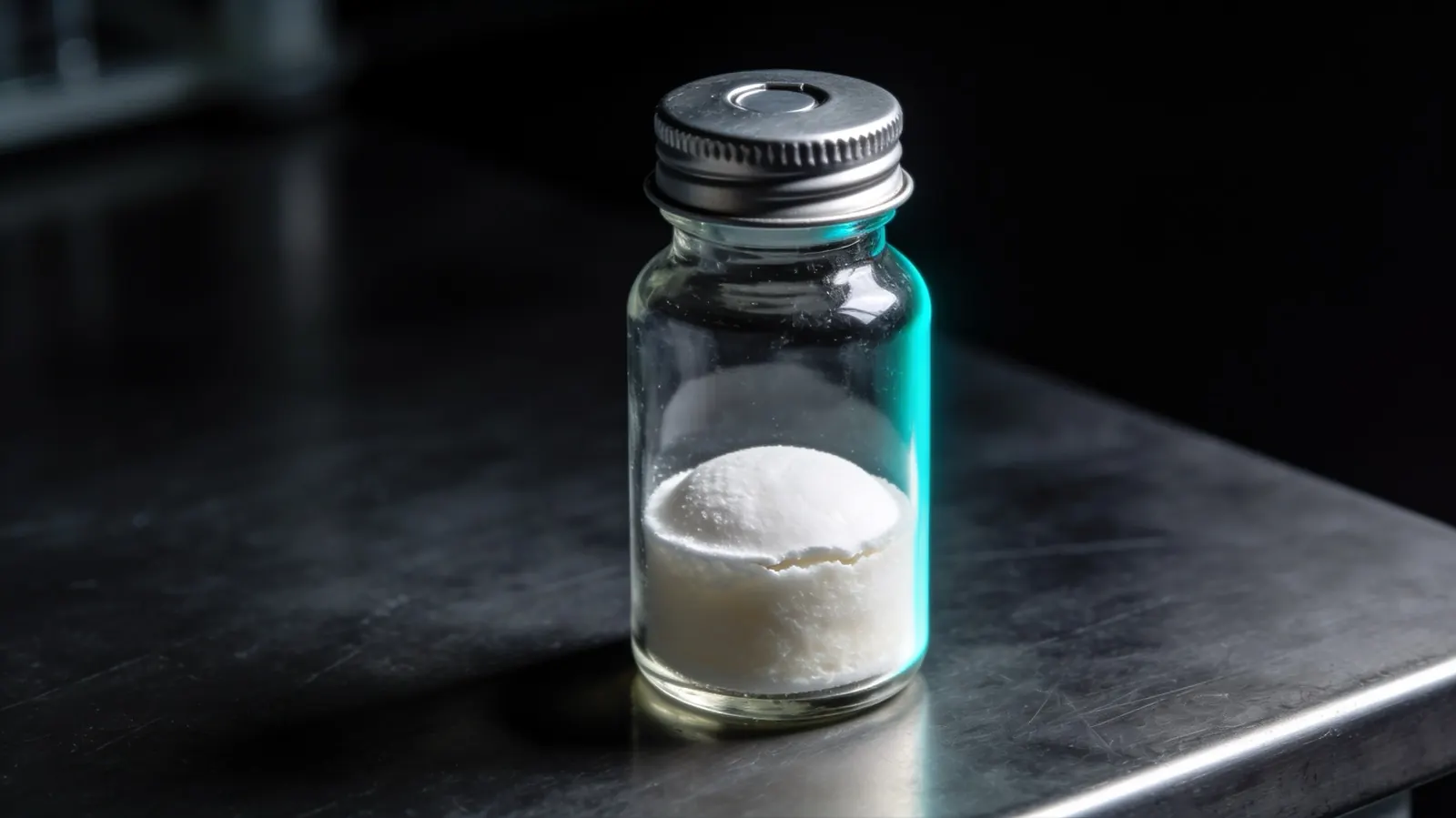
Physically the BPC-157 peptide is a white to off-white lyophilised cake, soluble in bacteriostatic water and in 0.9% sodium chloride, stored at −20°C for the long term and 2 to 8°C in use. In this catalogue BPC-157 ships as a 10mg vial released at 99.51% purity by HPLC, and it is a component of the GLOW and KLOW blends at 10mg each.
Those four figures, sequence, formula, mass and registry number, are worth stating together because almost nothing else states them together. Of the nine results measured on this search, one is a 2014 journal paper that gives the sequence and a rounded mass; the registry number appears on none of them. A specification is not a difficult thing to publish. It is simply that most pages written about this molecule are written about something other than the molecule.
- 0 g/mol
- Molecular weight of the free BPC-157 peptide
- Calculated for C62H98N16O22; reported as M.W. 1419 in the 2014 Molecules tendon-fibroblast paper
- 0
- Amino acid residues, which is what makes it a pentadecapeptide
- Sequence GEPPPGKPADDAGLV
- 0-51-0
- CAS registry number for the peptide
- Chemical Abstracts Service registry
| Property | Value | Where the figure comes from |
|---|---|---|
| Sequence | GEPPPGKPADDAGLV | Identity confirmation by LC-MS on each lot |
| Residue count | 15, a pentadecapeptide | Follows from the confirmed sequence |
| Molecular formula | C62H98N16O22 | Calculated from the sequence |
| Molecular weight | 1419.53 g/mol | Calculated, and cross-checked against the observed mass |
| CAS registry number | 137525-51-0 | Registry assignment, not a measurement |
| Terminal groups | Free N-terminus, free C-terminus | Sequence as written; no acetyl, no amide |
| Appearance | White to off-white lyophilised cake | Stated on each certificate of analysis |
| Solubility | Bacteriostatic water; 0.9% sodium chloride | Supplier specification |
| Storage | −20°C long term, 2 to 8°C in use | Supplier specification |
| Vial size | 10mg, a single size | Product specification |
| Counter-ion | Trifluoroacetate, in the ordinary case | Consequence of the purification method |
Where the BPC-157 peptide name comes from, and the other names it answers to
BPC stands for Body Protection Compound. That name belongs to a protein identified in gastric juice, not to the fifteen-residue chain sold under the abbreviation. The peptide in the vial corresponds to a partial sequence of that protein: one region of it, lifted out and made on its own.
This matters more than it sounds. The fragment does not occur as a free peptide in nature. Nothing secretes GEPPPGKPADDAGLV; the region exists inside a larger molecule, and the fifteen-residue version exists because that region was the part of interest and synthesis was the way to isolate it. Every vial of the BPC-157 peptide anywhere is a laboratory construct with a borrowed sequence.
The 157 is a laboratory designation and nothing more. It is not a residue count and not a mass: the chain is fifteen residues and 1419.53 g/mol, and neither number is anywhere near 157. Both assumptions get made, which is the only reason it is worth saying out loud.
The literature's own name for the BPC-157 peptide is longer than the catalogue's. Papers in the field write "stable gastric pentadecapeptide BPC 157" in full, often in the title, and a 2025 narrative review in PubMed Central dates the first description of the fragment to Sikirić and colleagues in 1993. That phrase is the one to search on if the intention is to find primary literature rather than commentary, because it is the string the authors themselves use.
Then there are the codes. The United States Department of Defense's Operation Supplement Safety page lists Body protection compound 157, BPC15, PL10, PL14736 and Bepecin as other names for the same substance, and lists them without saying what any of them are. They are development codes and alternative spellings, not different molecules, and confusing them for analogues is an easy mistake to make when a supplier listing uses one and a paper uses another.
The one entry in that group that is genuinely a different preparation is arginate. "BPC-157 arginate" is the same fifteen residues with a different counter-ion, which is a salt-form question rather than a sequence question, and the next section is about exactly that.
The same distinction applies to the other fragment peptides in this category. TB-500, to take the one BPC-157 is most often set beside, corresponds to a region of the protein thymosin beta-4 rather than being that protein. Preclinical work on a parent protein does not automatically describe a fragment of it, and work on a fragment does not describe the parent. Where a paper names one, it means one, and an abbreviation is not a licence to read across. The page on what is TB-500 sets out the same problem from the other side.
| Name or code | Where it appears | Same molecule? | Note |
|---|---|---|---|
| BPC-157 / BPC 157 | Catalogues, certificates, most literature | Yes | The hyphen is typographic. Search engines and analysts treat both spellings as one string |
| Body Protection Compound 157 | The abbreviation written out | Yes | BPC names the gastric-juice protein; the 157 is a laboratory code |
| Stable gastric pentadecapeptide BPC 157 | Primary literature, frequently in paper titles | Yes | The authors' own full form. The most productive search string for source papers |
| BPC15 | Alternative-name lists, including the DoD's Operation Supplement Safety page | Yes | An abbreviation of the same code, not a fifteen-residue variant of something else |
| PL14736 / PL 14736 | Pharmaceutical development literature | Yes | A development code carried by the same peptide through an earlier programme |
| PL10 / PL-10 | Pharmaceutical development literature | Yes | A second code from the same body of work |
| Bepecin | Alternative-name lists | Yes | Appears in name registers rather than in analytical documents |
| BPC-157 arginate | Supplier listings | Same peptide, different salt | The counter-ion differs, so the mass per vial differs. See the salt-form table below |
Four prolines, three glycines and a pair of aspartates
Seven of the fifteen residues of the BPC-157 peptide are either proline or glycine. That is an unusual composition, and it is the reason this particular chain behaves less like a floppy short peptide than its length suggests.
Proline is the residue that constrains a backbone. Its side chain loops back and bonds to its own backbone nitrogen, which fixes one of the two rotatable angles at that position and removes the amide hydrogen that every other residue offers to hydrogen bonding. One proline stiffens a local stretch. Positions three, four and five here are three prolines in a row, with a fourth at position eight, and a run like that imposes a defined local geometry rather than leaving the chain to sample freely.
Glycine does the opposite. With a hydrogen atom for a side chain it is the most permissive residue there is, and the three glycines, at positions one, six and thirteen, sit around the proline runs. The chain alternates between constrained stretches and hinges, which is a specific shape problem rather than the near-random coil most fifteen-residue peptides present in solution.
Charge sits almost entirely on one side of the ledger. One lysine at position seven is the only basic side chain, against a glutamate at position two and the adjacent aspartate pair at positions ten and eleven. Three acidic side chains to one basic makes an acidic, strongly hydrophilic molecule, which is consistent with how readily the lyophilised cake takes up bacteriostatic water and saline.
There is a practical consequence to all of this, and it is not about shape. A proline-rich sequence is a harder sequence to build cleanly, and a harder sequence to build cleanly is one where the purity figure on the certificate is doing more work. That thread runs through the synthesis section below and out the other side into what the analysis can and cannot show.
- 0
- Proline residues, at positions 3, 4, 5 and 8
- Counted from GEPPPGKPADDAGLV
- 0
- Glycine residues, at positions 1, 6 and 13
- Counted from GEPPPGKPADDAGLV
- 0
- Acidic side chains, Glu2, Asp10 and Asp11, against a single lysine
- Counted from GEPPPGKPADDAGLV
Proline ×4
Positions 3, 4, 5 and 8. A cyclic side chain fused to the backbone nitrogen: restricted rotation, no amide hydrogen, and a defined local geometry across the three-in-a-row stretch.
Glycine ×3
Positions 1, 6 and 13. No side chain at all, the widest conformational freedom of any residue, and placed either side of the proline runs.
Asp-Asp
Positions 10 and 11. Two carboxylate side chains in succession, with the glutamate at position 2 giving the chain three acidic groups against a single lysine.
Salt form, and why two vials marked 10mg are not the same mass of peptide
A vial labelled 10mg contains 10mg of fill. It does not contain 10mg of bare peptide, and the gap between those two statements is the single most misread thing in this category.
Purified peptide comes off preparative HPLC as a salt. The mobile phase is generally acidified with trifluoroacetic acid, the acidic groups on the chain pick up the counter-ion, and what is freeze-dried is the trifluoroacetate salt rather than the free peptide. The BPC-157 peptide has three acidic side chains and a free C-terminal carboxylate, which is a lot of sites for a counter-ion to sit on relative to a fifteen-residue chain. Add the water that a lyophilised cake holds even when dry to the touch, and the fill weight and the peptide weight are simply different quantities.
This is why net peptide content exists as a separate line on a certificate. It is the measured mass of peptide in the vial, stated in milligrams, after the counter-ion and the residual water have been accounted for. HPLC purity answers a different question, namely what fraction of the peptide present is the intended sequence, and a certificate that reports one without the other has answered half of it.
Some suppliers exchange the trifluoroacetate for acetate, and a few sell material described as free base or as an arginate. None of that changes the sequence, the formula or the 1419.53 g/mol. All of it changes the number of milligrams of peptide behind a given label weight. When one listing looks cheaper than another per milligram, the salt form and the net peptide content are the first two things to compare, and how to read a peptide certificate of analysis sets out where on the document to find them.
On the lots released here the measured content runs slightly above the label rather than below it: 10.68mg of peptide in a 10mg vial on the current lot. That is a fill tolerance, not a purity claim, and it is stated because it is measured. A supplier who publishes no content figure at all is not publishing a better one.
| Form | What a certificate states | Effect on the peptide mass in the vial | How to tell from the paperwork |
|---|---|---|---|
| Trifluoroacetate (TFA) | "TFA salt", or frequently nothing at all | Counter-ion is part of the fill, so the peptide mass is below the fill mass | A net peptide content line stated separately from the HPLC figure |
| Acetate | "Acetate salt", after a deliberate salt exchange | Same principle, a different counter-ion mass | Named on the certificate, or implied by a residual-TFA result near zero |
| Free base | "Free base" or "desalted" | No counter-ion contribution at all | Rare in research material and always stated explicitly when it is true |
| Arginate | Usually named in the product title rather than in the analysis | A different counter-ion again, and a different mass per label milligram | Treat it as a separate preparation of the same fifteen residues, not a separate molecule |
How a fifteen-residue chain is made
The BPC-157 peptide is made by solid-phase synthesis, the general route for a peptide of this length. The C-terminal valine is anchored to a resin bead and the chain is extended one residue at a time towards the N-terminus. The cycle is deprotect, couple, wash, repeat, with the growing peptide held on the bead throughout. One coupling step for every residue after the first.
Proline makes those steps more awkward than the residue count suggests. Its nitrogen is a secondary amine inside a ring, so coupling onto it is slower and more sterically hindered than coupling onto an ordinary residue, and consecutive prolines are a known difficult stretch in synthesis. An incomplete coupling leaves a chain missing one residue, which is a deletion sequence: a molecule close enough in mass and behaviour to the target to need separating out.
A deletion sequence is the impurity worth understanding, because it is the one that behaves most like the product. Drop a proline from GEPPPGKPADDAGLV and the result is fourteen residues, roughly 97 g/mol lighter, with almost the same charge, almost the same polarity and a retention time close enough to the target that a short or poorly resolved chromatographic method will not separate the two peaks. That is the whole argument for a long analytical gradient and a published chromatogram rather than a bare percentage.
That separation is preparative HPLC, generally with trifluoroacetic acid in the mobile phase, which is where the trifluoroacetate counter-ion in finished peptide material usually comes from. The purified peptide is then frozen and dried under vacuum, which is what produces a cake rather than a powder. The form, and the reason for it, is covered in what lyophilized powder is. The same HPLC method, run analytically, is what the purity figure on the certificate reports.
How BPC-157 peptide identity and purity are documented
Two measurements do the work, and they answer different questions. Mass spectrometry answers "is this the right molecule". Reverse-phase HPLC answers "how much of what is here is that molecule". Neither substitutes for the other, and a certificate that carries only one has told you half of what you needed.
Identity confirmation by LC-MS is the more absolute of the two. The instrument measures the mass of what elutes and compares it with the mass calculated from GEPPPGKPADDAGLV: 1419.53 g/mol for the neutral peptide, observed in practice as the charged ions the instrument actually sees. A match at that mass, on a chromatographic peak at the expected retention time, is what a certificate means by "identity confirmed". A mass a hundred daltons light is a deletion sequence; a mass offset by a counter-ion is a salt; an unexpected mass is a different peptide altogether, which is how substitution gets caught.
The HPLC figure is a purity figure, and it is an area percent: the fraction of the total detected peak area that belongs to the main peak, at a stated detection wavelength. It is a relative measurement, which is why the method matters as much as the number. A gradient too short to resolve a deletion sequence from the target will report a higher purity than a longer one on the same material, and both numbers will be honestly obtained. Peptide purity testing covers what a method has to do before its percentage means anything.
The certificates published here for the BPC-157 peptide name the laboratory, the lot, the accession number and a search code, alongside the appearance, the HPLC result, the identity result and the net peptide content. The accession number is the laboratory's own reference for the sample, and it is the field that makes a certificate checkable against the laboratory rather than only against the supplier who printed it. Lot 2FRBRG, to take the current one, carries accession 2605270306 from Freedom Diagnostics.
It is worth being equally clear about what these documents do not establish, because a release certificate is a narrow instrument and it is often read as a broad one.
| Question | On the certificate? | What answers it |
|---|---|---|
| Is this the right sequence? | Yes | LC-MS identity confirmation against the calculated 1419.53 g/mol |
| How much of what is present is that sequence? | Yes | Reverse-phase HPLC, reported as area percent at a stated wavelength |
| How much peptide is actually in the vial? | Yes | Net peptide content, stated in milligrams |
| Does this document describe my vial? | Yes, if the lot matches | The lot number, checked against the label on the verification page |
| Is the material sterile? | No | A separate microbiological test, not performed on research-grade material here |
| Is it stable in acid? | No | A stability study under stated pH, temperature and time, which is not a release test |
| What is its half-life? | No | A pharmacokinetic study in an organism. Not a property of a lot of powder |
What a certificate says about a given BPC-157 peptide lot
Purity is a property of a lot, not of a compound, so the only number worth anything is the one measured on the material that ships. The current lot is 2FRBRG: a 10mg vial, released on 30 May 2026 at 99.51% by HPLC, with a net peptide content of 10.68mg, assayed by Freedom Diagnostics. The lot before it, BPC11182025-J, was released on 30 April 2026 at 99.247% with a net peptide content of 10.65mg, and before that WQ988T, released on 11 March 2026 at 99.665% with 11.15mg. All three documents sit in the certificate of analysis library alongside every other lot released here.
Three lots, three different purity figures, three different content figures, one specification. That spread is the point rather than an embarrassment. 99.247%, 99.51% and 99.665% are three separate measurements on three separate syntheses, and the variation between them is what a real measurement looks like. A supplier quoting a single identical figure across every lot for years is quoting a specification, and the difference between the two is set out in what peptide purity means.
The HPLC percentage and the net peptide content answer different questions and are often confused. The HPLC figure says how much of the peptide present is the intended sequence rather than deletion sequences and other synthesis by-products. Net peptide content says how much actual peptide is in the vial, once the counter-ion and the water that a lyophilised cake carries are accounted for. That is why the figure is stated in milligrams against the vial size rather than as a percentage of it.
All three certificates come from Freedom Diagnostics, an independent laboratory rather than the synthesis house, and all three are published against the lot number printed on the vial. That is the check to make before an order, on any supplier: not whether a certificate exists somewhere on the site, but whether the one in front of you names the lot that will arrive. Typing a lot number into the batch verification page is the fastest way to establish that for a vial already in hand, and how to vet a research peptide supplier sets out the rest of the checks around it.
- 0%
- HPLC purity of the current lot, 2FRBRG
- Freedom Diagnostics, released 30 May 2026
- 0mg
- Net peptide content measured in that 10mg vial
- Same certificate, accession 2605270306
- 0
- BPC-157 peptide lots published with full certificates
- Certificate of analysis library

| Lot | Released | HPLC purity | Net peptide content | Identity | Laboratory |
|---|---|---|---|---|---|
| 2FRBRG | 30 May 2026 | 99.51% | 10.68mg | Confirmed (LC-MS) | Freedom Diagnostics |
| BPC11182025-J | 30 April 2026 | 99.247% | 10.65mg | Confirmed (LC-MS) | Freedom Diagnostics |
| WQ988T | 11 March 2026 | 99.665% | 11.15mg | Confirmed (LC-MS) | Freedom Diagnostics |
Read the certificate before the vial arrives
Every BPC-157 lot released here is published whole, against the lot number printed on the label: the HPLC figure, the identity confirmation, the net peptide content and the laboratory that signed it.
Open the certificate libraryRegulatory status, stated as fact
Four separate bodies have a published position on this substance, and none of them is a matter of interpretation. Stating them is not a warning and not a disclaimer; it is part of describing what the material is.
The United States Food and Drug Administration has not approved the BPC-157 peptide as a drug for any use. It sits in Category 2 of the agency's bulk drug substances lists, the category for substances with significant safety risks, which is the classification that keeps it out of the hands of compounding pharmacies as a bulk substance. An FDA advisory committee took the substance up again in July 2026 in connection with the Section 503A Bulks List; no final decision has been published, so the Category 2 classification is the one in force.
The World Anti-Doping Agency prohibits it at all times under class S0, non-approved substances, which is the class that covers any pharmacological substance not currently approved by any governmental regulatory health authority for human therapeutic use. The United States Anti-Doping Agency follows the same list. Two of the nine pages ranking for this term exist substantially to say so.
None of that is a complication for a laboratory supplier; it is the reason the supply is framed the way it is. Material sold here is a reference standard for in-vitro and preclinical research, it is not sold for use in people or animals, and the regulatory position above is one of the reasons that boundary is drawn where it is rather than a footnote at the end of a page that argues otherwise.
What the regulatory record does bear on directly is product quality. The FDA's 2026 evidence and safety review of the substance raised impurities and inconsistent characterisation of the active ingredient in material found on the market. Those are exactly the two things a lot-matched, independently issued certificate is for: an identity confirmation against the calculated mass answers characterisation, and a published chromatogram with a stated method answers impurities. A page can call third-party testing non-negotiable, as one of the ranking pages does, and still give a reader no way to act on it. The way to act on it is to read the document for the lot in hand.
| Body | Position | What it means here |
|---|---|---|
| US Food and Drug Administration | Not an approved drug for any indication | Nothing on this site is offered for use in people or animals |
| FDA, bulk drug substances | Category 2, significant safety risks | Not available to compounding pharmacies as a bulk substance under that classification |
| FDA advisory committee | Taken up in July 2026 regarding the Section 503A Bulks List; no final decision published | Status could change; the Category 2 classification is the one currently in force |
| World Anti-Doping Agency | Prohibited at all times, class S0, non-approved substances | A prohibited substance in sport, at all times and in all sports |
| US Anti-Doping Agency | Prohibited, following the WADA Prohibited List | The same position, applied to athletes in the United States |
The acid-stability question, and what a certificate cannot tell you
Because the parent protein was identified in gastric juice, behaviour in an acidic medium is the first thing people ask about this molecule. It is a fair question to ask of the chemistry. It is not a question this page answers, and it is not a question any certificate answers either.
Stability in acid is a physicochemical property measured under stated conditions: a defined pH, a defined temperature, a defined time. A figure obtained in one medium does not transfer to another. Nothing on this page restates what any particular study reports, because a lot certificate measures purity, identity and net peptide content, and none of those is a stability figure. The literature's habit of building the word "stable" into the compound's own long name does not change that; it is a description from the source papers, not a released specification.
The same boundary applies to pharmacokinetics, and it is worth drawing explicitly because it is the most common category error in the subject. The 2025 narrative review in PubMed Central reports, from the animal work it cites, a plasma half-life of under thirty minutes with concentrations back to baseline within twenty-four hours. Take that figure or leave it: either way it is a measurement made in an organism, not a property of a vial. No release test on a lot of lyophilised powder produces it, no certificate states it, and a supplier who offered one would be telling you something the paperwork cannot support.
What does govern the material in front of a researcher is duller and more useful: temperature, moisture and time. The lyophilised cake is dry and stable at −20°C; once it has taken up water it is a solution with a finite life at 2 to 8°C. The general principles behind those two numbers are set out in how to store peptides, and they apply to the BPC-157 peptide the same way they apply to every other chain in the catalogue.
What the preclinical literature studies
Three areas account for most of the published work, and all three are model systems: tissue repair, gastrointestinal cytoprotection, and connective tissue. The endpoints within them are more specific than that summary suggests, and naming them is more useful than restating the summary.
The angiogenesis work reads out on vascular endothelial growth factor signalling and on new microvessel formation in injured-tissue and vascular-occlusion preparations in rodents. The connective-tissue work is largely in cultured tendon-derived fibroblasts, where migration rate in outgrowth and scratch assays is the primary measurement, and where a 2014 paper in Molecules examined growth hormone receptor expression in those same cultures by real-time PCR and Western blot. The gastrointestinal work, which follows directly from where the parent protein was found, uses rodent gastric and intestinal mucosal models including NSAID-challenge preparations, scored on mucosal lesions and epithelial barrier markers. Around the edges of all three sit the early-signalling readouts: Egr-1 transcription, FAK and paxillin phosphorylation, and nitric oxide pathway markers. Those are measurements of signalling rather than of outcomes.
Every one of those is preclinical: in-vitro systems and animal models, examined for signalling and for markers. None of it is a statement about a person, and nothing on this site is. The material is supplied for laboratory research use only, and the model systems above are described as models because that is what they are.
It is also worth saying what the literature does not yet contain, since the ranking pages on this term are not consistent about it. The published human record is thin. A Phase 2 trial in hamstring injury, NCT07437547, is listed on ClinicalTrials.gov as recruiting with no results posted, and the isolated safety reports in the literature are very small. An article that presents preclinical endpoints as settled outcomes is describing something other than the evidence.
Angiogenesis and VEGF
Rodent injured-tissue and vascular-occlusion preparations, read out on vascular endothelial growth factor receptor expression and new microvessel formation.
Tendon fibroblast migration
Cultured tendon-derived fibroblasts, with migration rate in outgrowth and scratch assays as the measured endpoint.
Growth hormone receptor expression
The same fibroblast cultures, assayed for receptor transcript and protein by real-time PCR and Western blot in the 2014 Molecules work.
Gastrointestinal cytoprotection
Rodent gastric and intestinal mucosal models, including NSAID-challenge preparations, scored on mucosal lesions and epithelial barrier markers.
Early signalling markers
Egr-1 transcription, FAK and paxillin phosphorylation, and nitric oxide pathway markers. These are signalling measurements rather than outcome measurements.
Handling the BPC-157 peptide at the bench
The published cell work is a better guide to what this material is like to handle than any supplier page, because it states quantities. The 2014 tendon-fibroblast study worked at 0.1, 0.25 and 0.5 micrograms per millilitre in ordinary culture medium. Those are sub-microgram per millilitre concentrations, which puts a single 10mg vial at an enormous quantity of material on the scale the literature actually uses it.
Reconstitution is the ordinary business of a lyophilised peptide. The cake dissolves in bacteriostatic water and in 0.9% sodium chloride; the acidic, hydrophilic composition described above is why it goes into both readily rather than needing an organic co-solvent. Bacteriostatic water is the usual choice where a vial will be drawn from more than once, because the 0.9% benzyl alcohol in it suppresses bacterial growth between withdrawals. Bacteriostatic water for peptides sets out the difference against sterile water.
Storage is two numbers and a habit. Minus twenty for the sealed lyophilised vial, two to eight once it is in solution, and aliquoting rather than repeatedly warming and re-freezing one tube, because freeze-thaw cycles are the avoidable damage. One of the clinical pages on this search quotes a ten to fourteen day window for reconstituted material held refrigerated; that is a handling figure rather than a released specification, and it is a reasonable order of magnitude to plan around rather than a number any certificate here guarantees.
The cake itself is worth looking at before anything is added to it. A cake that has collapsed, gone glassy or shrunk away from the glass has been warm at some point in its history, and that is information the paperwork will not give you.
| Parameter | As reported | What it tells a reader handling the material |
|---|---|---|
| Working concentrations | 0.1, 0.25 and 0.5 µg/mL | Published cell work operates below a microgram per millilitre; a 10mg vial is a very large amount at that scale |
| Medium | DMEM with 10% fetal bovine serum | The peptide went into a standard culture medium, not a specialised vehicle |
| Antibiotic | 100 U/mL penicillin | Culture-level contamination control, which is a separate thing from the bacteriostatic agent in a reconstitution diluent |
| Incubation | 37°C, humidified 95% air / 5% CO₂ | Standard mammalian cell culture conditions |
| Viability assay | MTT at 0.05 mg/mL, absorbance read at 570 nm | How the cell-level readout was taken |
| Molecular readouts | Real-time PCR and Western blot | Measurements of the cells, not of the peptide's identity |
The BPC-157 peptide, 10mg, with the lot certificate attached
A single vial size, a white to off-white lyophilised cake, soluble in bacteriostatic water and 0.9% sodium chloride, released against a named lot and an independently issued certificate. Supplied for laboratory research use only.
See the BPC-157 specificationThe BPC-157 peptide inside the GLOW and KLOW blends
The BPC-157 peptide appears in two multi-component vials in this catalogue, at 10mg in each, and a blend raises one documentation problem that a single-compound vial does not: a single purity figure for a vial containing three or four different molecules would be meaningless.
So the certificates report per component. A GLOW lot certificate states a measured content for the GHK-Cu, for the BPC-157 and for the thymosin beta-4 component separately, and a KLOW certificate does the same across its four. Across the four published GLOW lots the measured BPC-157 content runs from 9.84mg to 13.17mg against a 10mg label, and across the three published KLOW lots from 9.42mg to 10.57mg. Those are real measurements on real fills and the spread is what a real measurement of a multi-component fill looks like.
One naming detail is worth knowing before reading one of those documents. On several lots the certificate names the third component as Thymosin Beta-4, the full protein, rather than TB-500, its seven-residue fragment, and the catalogue lists it the way the certificate states it rather than the way the marketing convention would. GLOW vs KLOW goes through both formulations component by component.
| Blend | BPC-157 on the label | Measured across published lots | Other components |
|---|---|---|---|
| GLOW | 10mg of a 70mg fill | 9.84mg, 10.20mg, 10.86mg and 13.17mg across four lots | GHK-Cu 50mg, TB-500 10mg |
| KLOW | 10mg of an 80mg fill | 9.42mg, 10.46mg and 10.57mg across three lots | GHK-Cu 50mg, KPV 10mg, TB-500 10mg |
The BPC-157 peptide, stated plainly: a synthetic pentadecapeptide, GEPPPGKPADDAGLV, formula C62H98N16O22, molecular weight 1419.53 g/mol, CAS 137525-51-0, whose sequence corresponds to a region of a gastric-juice protein called Body Protection Compound and which does not occur as a free peptide in nature. The same fifteen residues answer to PL 14736, PL-10, BPC 15 and Bepecin, and to "stable gastric pentadecapeptide BPC 157" in the primary literature. Four prolines and three glycines give the chain unusual rigidity for its length; a glutamate at position two with a pair of aspartates at ten and eleven makes it acidic and freely soluble; and a counter-ion the label does not mention is why net peptide content is stated in milligrams rather than assumed from the vial size. The BPC-157 peptide is not an approved drug anywhere and it is prohibited in sport, which are facts about the substance rather than caveats about the page. What can be checked before it ships is the lot in hand: 99.51% by HPLC, 10.68mg net peptide content, assayed independently and published against the number on the vial, which is the same check worth making on any research peptide supplier.
Common questions
What does BPC-157 stand for?
Body Protection Compound. The name belongs to a protein identified in gastric juice, and the BPC-157 peptide corresponds to a fifteen-residue region of that protein rather than to the whole of it. The 157 is a laboratory designation: it is neither the residue count nor the mass.
What is the BPC-157 peptide sequence?
GEPPPGKPADDAGLV: glycine, glutamate, three prolines, glycine, lysine, proline, alanine, two aspartates, alanine, glycine, leucine, valine. Fifteen residues, molecular formula C62H98N16O22, molecular weight 1419.53 g/mol, CAS 137525-51-0.
What is the molecular weight of the BPC-157 peptide?
1419.53 g/mol, for the molecular formula C62H98N16O22. That is the free peptide; a lyophilised vial also contains counter-ion and residual water, which is why the certificate states net peptide content in milligrams as a separate figure from purity.
Is BPC-157 a naturally occurring peptide?
No. The region the BPC-157 peptide corresponds to sits inside a larger protein found in gastric juice, but the fifteen-residue fragment does not occur free in nature. It is made by solid-phase synthesis, the general route for a chain of this length.
Who first described BPC-157?
A 2025 narrative review in PubMed Central dates the first description of the fifteen-residue fragment to Sikirić and colleagues in 1993. The parent protein work in gastric juice is earlier than that. Papers from the group and its successors write the compound's name in full as "stable gastric pentadecapeptide BPC 157".
What are PL 14736 and PL-10?
Development codes for the same peptide, carried over from earlier pharmaceutical work and still used in parts of the literature. They are not analogues or different molecules. The US Department of Defense's Operation Supplement Safety page lists them, along with BPC15 and Bepecin, as other names for the same substance.
Is BPC-157 arginate the same thing as BPC-157?
Same fifteen residues, different counter-ion. Arginate is a salt form rather than a different sequence, so the formula and the 1419.53 g/mol of the peptide itself are unchanged while the mass of peptide behind a given label weight is not. The figure that settles it is net peptide content in milligrams.
Is BPC-157 the same as TB-500?
No. They are unrelated molecules with different lengths, masses and origins, and they share no sequence: fifteen residues at 1419.53 g/mol against seven at 889.0 g/mol. The two are compared residue by residue in BPC-157 vs TB-500.
Is BPC-157 FDA approved?
No. The BPC-157 peptide is not an approved drug for any indication, and the FDA has placed it in Category 2 of its bulk drug substances lists, the category for substances with significant safety risks. An advisory committee took it up again in July 2026 in connection with the Section 503A Bulks List and no final decision has been published.
Is BPC-157 prohibited in sport?
Yes. The World Anti-Doping Agency prohibits it at all times under class S0, non-approved substances, which covers pharmacological substances not approved by any governmental health authority for human therapeutic use. The US Anti-Doping Agency follows the same list.
Does this page describe what BPC-157 does in people?
No, and deliberately. Everything here is chemistry, analysis, provenance, regulatory status and laboratory handling. The published literature on the molecule is preclinical, meaning in-vitro systems and animal models, measured on signalling and on markers, and the material is supplied for laboratory research use only.
How is the BPC-157 peptide supplied and stored?
As a white to off-white lyophilised cake in a 10mg vial. It dissolves in bacteriostatic water and in 0.9% sodium chloride, and is stored at −20°C for the long term and 2 to 8°C once in use. Aliquoting rather than repeated freeze-thaw is the habit that protects material in solution.
Why is BPC-157 a cake rather than a loose powder?
Because it is freeze-dried in the vial. The solution is frozen and the water drawn off under vacuum, which leaves the solid holding the shape it froze in. A cake that has collapsed or gone glassy is a sign the vial has warmed at some point; what lyophilized powder is covers what the form tells you.
What concentrations is BPC-157 used at in published cell work?
The 2014 tendon-fibroblast study in Molecules worked at 0.1, 0.25 and 0.5 micrograms per millilitre in DMEM with 10% fetal bovine serum, at 37°C in 95% air and 5% CO₂. Those are the in-vitro working concentrations reported in that paper, on that cell type.
What purity is the BPC-157 peptide released at?
Lot 2FRBRG was released on 30 May 2026 at 99.51% by HPLC, net peptide content 10.68mg, assayed by Freedom Diagnostics. The two lots before it were BPC11182025-J at 99.247% with 10.65mg, and WQ988T at 99.665% with 11.15mg.
Why do BPC-157 peptide lots have different purity numbers?
Because purity is measured on each batch rather than assigned to the compound. 99.247%, 99.51% and 99.665% are three separate HPLC measurements on three separate syntheses. A supplier quoting one fixed figure across every lot is quoting a specification, not a measurement. The distinction is set out in what peptide purity means.
What does net peptide content mean on a BPC-157 peptide certificate?
How much of the vial's contents is peptide, stated in milligrams. A lyophilised cake also carries counter-ion and residual water, so a 10mg vial is not 10mg of bare peptide. HPLC purity and net peptide content are different measurements and a certificate should report both.
What does LC-MS identity confirmation actually check?
That the mass of the material eluting at the expected retention time matches the mass calculated from GEPPPGKPADDAGLV. A mass roughly a hundred daltons light indicates a deletion sequence; an unrelated mass indicates a different peptide. It is the measurement that catches substitution, which a purity percentage on its own cannot.
Does a certificate of analysis tell me BPC-157's half-life or acid stability?
No. A release certificate reports identity, purity and net peptide content on a lot of powder. Half-life is measured in an organism and stability is measured under a stated pH, temperature and time; neither is a property of the lot, and no certificate here states either.
How do I check that a BPC-157 certificate matches the vial I have?
Read the lot number printed on the label, then enter it on the lot verification page. Compare what comes back against the label in your hand: lot, size, HPLC figure, identity confirmation and testing laboratory. A certificate that names a different lot is not evidence about your vial.
What counter-ion does the BPC-157 peptide usually come as?
Trifluoroacetate, in the ordinary case. Preparative HPLC is generally run with trifluoroacetic acid in the mobile phase, so the purified peptide is isolated as the trifluoroacetate salt. Some material is exchanged to acetate. It is part of what net peptide content accounts for.
Is the BPC-157 peptide in the GLOW and KLOW blends?
Yes, at 10mg in each. Every component of a blend is assayed and reported separately on the certificate rather than as a single blended figure, so a GLOW vial carries a per-component set of numbers. Measured BPC-157 content across the published GLOW lots runs from 9.84mg to 13.17mg against that 10mg label.
Why is BPC-157 considered a difficult peptide to synthesise?
The prolines. Three of them sit consecutively at positions three, four and five, with a fourth at position eight, and proline's ring nitrogen makes each coupling onto it slower and more hindered than onto an ordinary residue. That raises the chance of deletion sequences, which is what the purification step and the HPLC figure exist to control.
Is BPC-157 sterile?
No, and no certificate here claims it is. Sterility is a separate microbiological test that is not performed on research-grade lyophilised material. The documents published against each lot cover identity, purity, net peptide content and appearance.
How do BPC-157 peptides differ between suppliers?
On paper they should not: BPC-157 peptides all resolve to the same fifteen-residue sequence, GEPPPGKPADDAGLV, and the same CAS number. What differs is what each vial actually contains. Two vials both marked 10mg can hold different masses of peptide once the counter-ion is accounted for, and a purity figure means nothing without the method that produced it. Compare the certificates rather than the labels: identity by mass spectrometry, purity by peptide purity as HPLC area percent, net peptide content stated separately, and a lot number that resolves to a document you can read. Anything sold without a per-lot certificate is being sold on assertion.
- PubChem CID 9941957, BPC-157: the sequence GEPPPGKPADDAGLV, the formula C62H98N16O22, the 1419.53 g/mol molecular weight and CAS 137525-51-0
- PubChem CID 62707662, TB-500 (Ac-LKKTETQ): the seven-residue acetylated sequence and mass used in the repair-peptide comparison table
- PubChem CID 139035031, copper tripeptide (GHK-Cu): the three-residue copper complex, its mass and its registry number, in the same comparison table
- FDA, Lyophilization of Parenterals, Inspection Technical Guide: why the material is a cake rather than a powder, and the residual moisture a dry cake still carries
- Bacteriostatic Water for Injection, USP, FDA label: the benzyl alcohol preservative in the multiple-dose diluent named for reconstitution
Read more
- GHK-Cu copper peptideA GHK-Cu copper peptide vial is blue, and every other vial in this catalogue is white. The colour is not a dye. It is the evidence that the complex formed.
- Ipamorelin peptideThe ipamorelin peptide contains three pieces no natural protein would supply. Read the sequence and the rest follows: this is a designed molecule, not a fragment of anything, and its identity is a matter of registry record.
- NAD+ peptide: a coenzyme, not a peptideNAD+ peptide is how the compound is usually searched for, and the word peptide is the wrong word. NAD+ is a dinucleotide coenzyme with no amino acids in it at all.
- What is the GLOW peptide blend?The GLOW peptide is not one peptide. GLOW is a product name for three molecules dried into a single vial, 70mg in total, in a ratio fixed before it was sealed.
- What is in the KLOW peptide blendThe KLOW peptide blend is four separate molecules sharing one vial, which means four identities to describe and four assays to read rather than one of each.
- GLP-3 RT peptideThe GLP-3 RT peptide is a 39-residue acylated chain registered under CAS 2381089-83-2. This page states what the molecule is, how a chain that long is built, and what the certificates we publish for it actually say.
For laboratory research use only. All compounds listed on this site are sold strictly as reference materials for in-vitro laboratory research conducted by qualified professionals. They are not drugs, foods, cosmetics, or medical devices. They are not intended for human or veterinary consumption, therapeutic use, diagnostic application, or any in-vivo use whatsoever. These statements have not been evaluated by the Food and Drug Administration. By purchasing, you affirm that you are a qualified researcher and that you will comply with all applicable institutional, local, state and federal regulations governing the handling of research chemicals. Published by SERVIAM BIO LABS.